
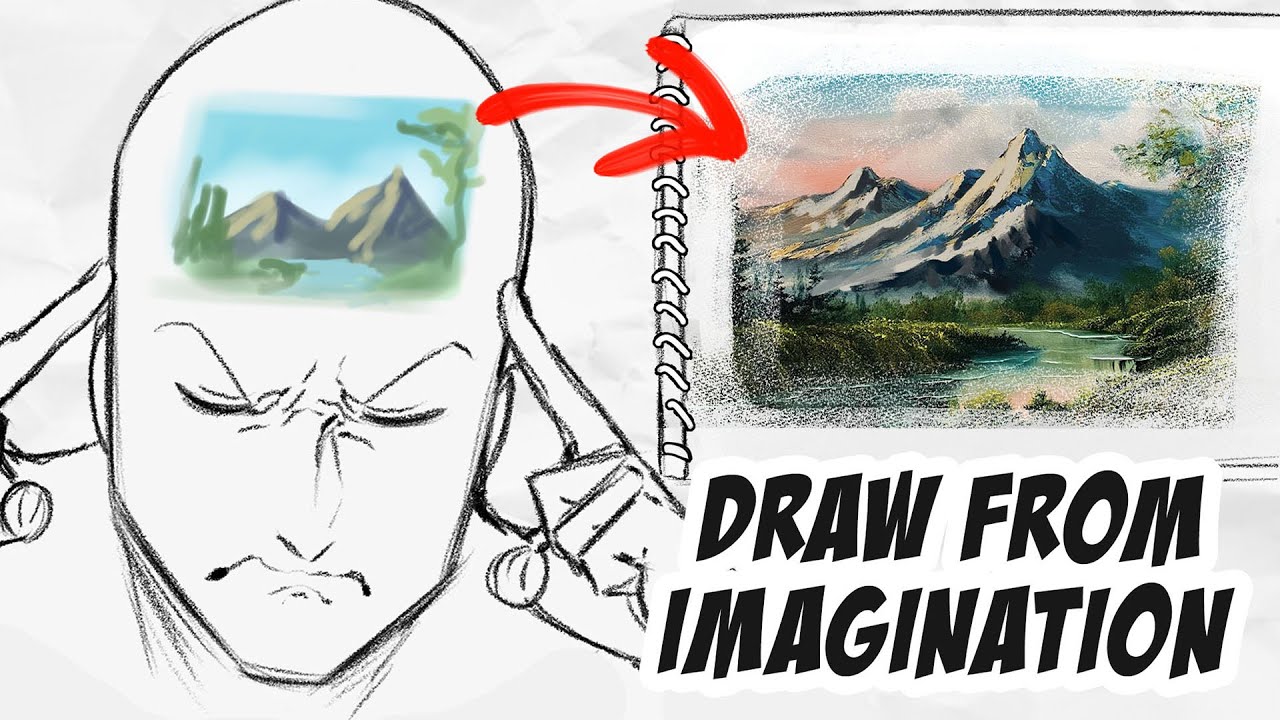
Drawing from imagination means creating original images from memory, ideas, and mental vision.
Drawing from imagination is one of the most rewarding skills an artist can build because it gives you freedom. You are not copying what is in front of you. You are learning how to turn ideas into clear shapes, forms, and scenes that feel real. In this guide, I’ll walk you through what drawing from imagination really is, why it matters, and how to improve it with simple, practical steps based on both experience and reliable art fundamentals.

What Drawing from Imagination Really Means
Drawing from imagination is the ability to create art without directly looking at a reference in the moment. It does not mean making things up with no structure. It means using visual memory, observation, and design knowledge to build something original.
In real practice, most artists do not rely on imagination alone. They mix reference study, memory, and invention. That is why strong artists can sketch a dragon, a room, or a character pose without freezing. They have trained their mind to understand form, light, perspective, and anatomy well enough to rebuild them later.
This skill shows up in many kinds of art:
- Character design
- Comic art
- Concept art
- Fantasy illustration
- Storyboarding
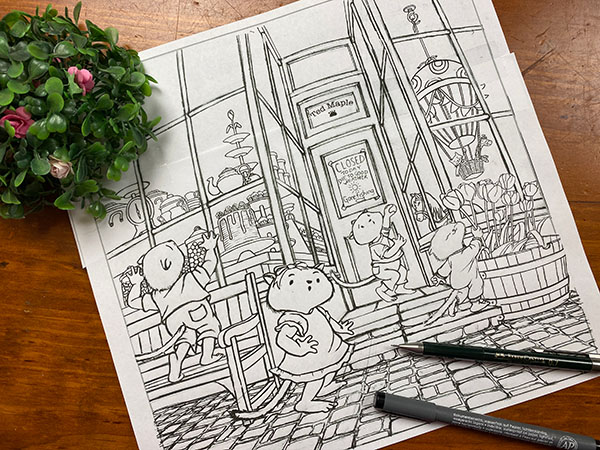
- Children’s book art
- Visual development
If you have ever tried to draw something “from your head” and felt lost, that is normal. Drawing from imagination is not a talent you either have or do not have. It is a skill you build step by step.
Why Drawing from Imagination Matters
Drawing from imagination gives you creative control. You are not limited to what you can find online or what is sitting in front of you. You can build worlds, make new characters, and tell stories visually.
It also helps you grow as an artist in practical ways. When you draw from imagination, you test what you actually understand. If a hand looks wrong or a building falls apart in perspective, that tells you exactly what needs more study.
Here are some key benefits:
- Better creativity because you can generate original ideas faster
- Stronger visual memory because your brain learns to store and recall forms
- Better problem-solving because you learn to fix mistakes without tracing a reference
- More confidence because you can draw anywhere, anytime
- More personal style because your choices become more intentional
I’ve seen this many times in my own work and in students I’ve helped. The artists who improve fastest are not the ones who only copy well. They are the ones who study carefully, then try to rebuild what they learned from memory. That gap between seeing and remembering is where real growth happens.
The Core Skills Behind Drawing from Imagination
Drawing from imagination depends on a few foundation skills. If one of them is weak, the drawing can feel shaky. If you strengthen them together, your imagination gets much easier to use.
Observation
Good imagination starts with good observation. You need to notice how things really look before you can invent them well. Shapes, angles, shadows, textures, and proportions all matter.
A lot of beginners want to skip this part, but that usually leads to flat or unrealistic drawings. Even fantasy art works better when the artist understands real-world structure.
Visual Memory
Visual memory helps you hold onto what you have seen. The more you study objects, people, animals, and places, the easier it is to recall them later. This is why drawing from life is so useful.
You do not need perfect memory. You only need enough recall to rebuild a believable version. That is often the difference between a vague sketch and a strong imagined scene.
Construction
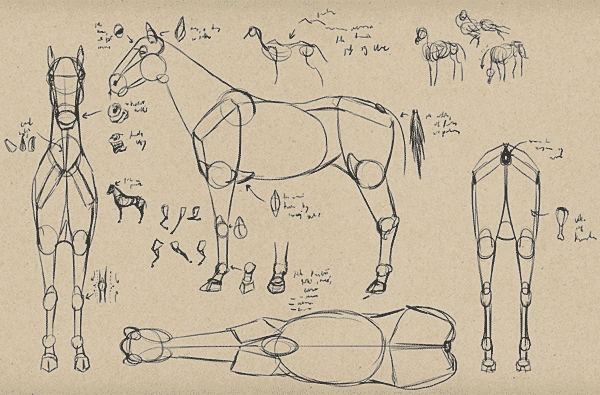
Construction means building the drawing from simple forms first. Think of spheres, boxes, cylinders, and cones as the skeleton of your idea. This makes drawing from imagination much less stressful.
When I sketch from imagination, I almost always start with basic shapes. It keeps me from getting trapped in details too early. That habit alone saved me from many frustrating redraws.
Perspective and Space
If your imagined object does not sit correctly in space, the whole drawing can break apart. Perspective helps you place things with depth and logic. It is especially important for environments, vehicles, buildings, and action scenes.
Anatomy and Proportion
For characters and creatures, anatomy matters. You do not need medical detail, but you do need to understand how joints move, how limbs connect, and how weight works. Proportion is what keeps a figure from looking odd or stiff.
Light and Shadow
Light gives form to imagination. Without it, drawings can look flat or confusing. If you know how light wraps around objects, you can invent scenes that feel real even when they are fully made up.

How to Start Drawing from Imagination
The easiest way to begin is to stop expecting perfect drawings right away. Start small. Build the habit of turning simple mental ideas into simple sketches.
Here is a practical process:
-
Pick one subject
Choose something manageable, like an apple, a chair, a cat, or a fantasy sword. -
Break it into simple forms
Ask yourself what basic shapes make up the object. A chair may be boxes and cylinders. A cat may be ovals and tubes. -
Sketch from memory first
Draw what you think it looks like before checking a reference. This shows you what you know and what you do not. -
Compare with a reference
After your first attempt, study a reference and notice the gaps. This is where the learning happens. -
Redraw it
Make a second version with the new knowledge fresh in your mind. -
Repeat often
Repetition is what turns awkward effort into real skill.
A mistake I made early on was using references too late or too randomly. I would stare at them without knowing what I was looking for. Once I started asking specific questions like “Where does the weight sit?” or “How does this bend?” my imagination improved fast.
A Simple Practice Routine for Better Imagination
If you want to get better at drawing from imagination, routine matters more than rare inspiration. A short daily practice can do more than one long, stressful session once a week.
Try this simple plan:
- 5 minutes: Warm up with circles, boxes, and gesture lines
- 10 minutes: Study a reference and note its main forms
- 10 minutes: Draw the subject from memory
- 10 minutes: Add details and correct mistakes
- 5 minutes: Sketch the same subject in a new pose or angle
You can also use themed practice days:
- Monday: Hands
- Tuesday: Heads
- Wednesday: Animals
- Thursday: Vehicles
- Friday: Buildings
- Saturday: Fantasy creatures
- Sunday: Review and redraw
This kind of routine builds visual confidence. It also keeps the practice from feeling overwhelming. The goal is not to be perfect. The goal is to make drawing from imagination feel more natural over time.
Common Mistakes Artists Make
Many artists struggle with drawing from imagination because they try to skip the hard parts. That usually leads to frustration, not progress. The good news is that most mistakes are fixable.
Common issues include:
- Relying on symbols instead of real forms, like drawing all eyes the same way
- Starting with details before the structure is clear
- Not studying enough real objects or people
- Ignoring perspective
- Copying references without understanding them
- Giving up too early when a drawing looks bad
- Expecting imagination to work like magic
One of the biggest traps is drawing what you think something should look like instead of what it actually looks like. That habit can freeze growth. The cure is simple: observe more, simplify more, and redraw more.
How to Train Your Brain for Imaginative Drawing
Your brain gets better at drawing from imagination when you feed it the right input. The more quality visual information you store, the more usable ideas you can pull out later.
Ways to train your brain include:
- Sketching from life regularly
- Studying art books and anatomy guides
- Watching how real shadows move across objects
- Looking at how different materials reflect light
- Memorizing simple forms from multiple angles
- Drawing the same subject from front, side, and three-quarter views
It also helps to build mental libraries. For example, if you study 20 different chairs, your brain starts to understand “chair-ness.” Then when you invent one, it will still feel believable.
This is why experienced artists can work faster. They are not guessing from scratch every time. They are drawing from a well-trained mental archive.
Drawing from Imagination vs Drawing from Reference
These two methods are not enemies. In fact, they work best together.
Drawing from reference helps you learn truth. Drawing from imagination helps you use that truth creatively. If you only use references, you may become dependent on them. If you only use imagination, your work may become weak or inconsistent.
A balanced approach looks like this:
- Use references to study form, anatomy, lighting, and design
- Use imagination to test what you learned
- Return to reference when something feels off
- Rebuild the drawing again until it feels solid
In my experience, the best drawings often come from a mix of both. The reference teaches the structure, and imagination adds the personality. That combination is where art starts to feel alive.
Practical Exercises to Improve Drawing from Imagination
If you want results, practice with intention. These exercises are simple, but they work because they force your brain to recall, rebuild, and solve problems.
Object Recall Exercise
Look at a common object for one minute, then hide it and draw it from memory. Afterward, check what you missed. This builds visual memory very quickly.
Shape Transformation Exercise
Draw a box, sphere, or cylinder, then turn it into something new. A box can become a robot head. A sphere can become a bird body. This helps you invent without panic.
Rotation Exercise
Draw the same object from different angles. Even a simple mug becomes much harder when you turn it. That challenge is useful because it teaches you how forms behave in space.
Story Sketch Exercise
Create a tiny scene from imagination, like “a child standing in a rainy street” or “a fox in a library.” Focus on mood, shape, and placement instead of detail.
Memory Redraw Exercise
Study a pose or object, wait a bit, then redraw it from memory. This is one of the best ways to find out what you truly understand.
Why Artists Get Stuck and How to Move Past It
Artist block often happens when the brain wants certainty before action. But drawing from imagination is full of uncertainty. That can feel uncomfortable, especially if you are used to copying.
If you feel stuck, try this:
- Shrink the task
- Draw the idea badly on purpose
- Focus on one part at a time
- Use a timer so you do not overthink
- Return to fundamentals instead of chasing perfection
A rough sketch is not failure. It is data. Every awkward drawing teaches you something. I still use that mindset when I feel blocked. It keeps the pressure down and helps me keep moving.
Tools That Help Without Controlling the Process
You do not need expensive tools to improve drawing from imagination. A pencil, paper, and a habit of practice can take you far. Still, some tools can make the process smoother.
Helpful tools include:
- Sketchbook for daily practice
- Graphite pencils or fineliners
- Basic shape guides
- Anatomy books
- Drawing apps with layers and undo
- Reference folders for study
- A mirror or camera for pose study
The tool is not the skill. It just supports the skill. I have seen strong work made with almost nothing, and weak work made with the best gear. The real engine is always your eye and your habits.
Frequently Asked Questions
What is drawing from imagination?
Drawing from imagination is creating art without directly copying what is in front of you. It uses memory, observation, and creative thinking to build original images.
Can beginners learn to draw from imagination?
Yes, absolutely. Beginners can learn it by studying basic shapes, practicing observation, and redrawing simple objects from memory. It takes time, but it is a learnable skill.
Is drawing from imagination better than using references?
Neither is better on its own. References help you learn accurately, while imagination helps you create original work. The strongest artists use both together.
How long does it take to get good at drawing from imagination?
It depends on practice, study, and consistency. Some improvement can happen in weeks, but strong skill usually builds over months and years of steady work.
Why does my imagination drawing look wrong?
Usually, the issue is weak fundamentals such as proportion, perspective, anatomy, or light. When those areas improve, imagined drawings start to look much more believable.
Conclusion
Drawing from imagination is not about magic. It is about learning how to see, remember, build, and invent with confidence. Once you understand the structure behind the image, your ideas become much easier to draw and much more fun to explore.
The best way to improve is to practice a little each day, study real forms, and redraw what you learn from memory. Keep your process simple, stay patient, and treat every sketch like a step forward. If you want to grow as an artist, start now with one small imagined drawing and build from there. Share your progress, keep learning, and continue exploring new ways to turn ideas into art.