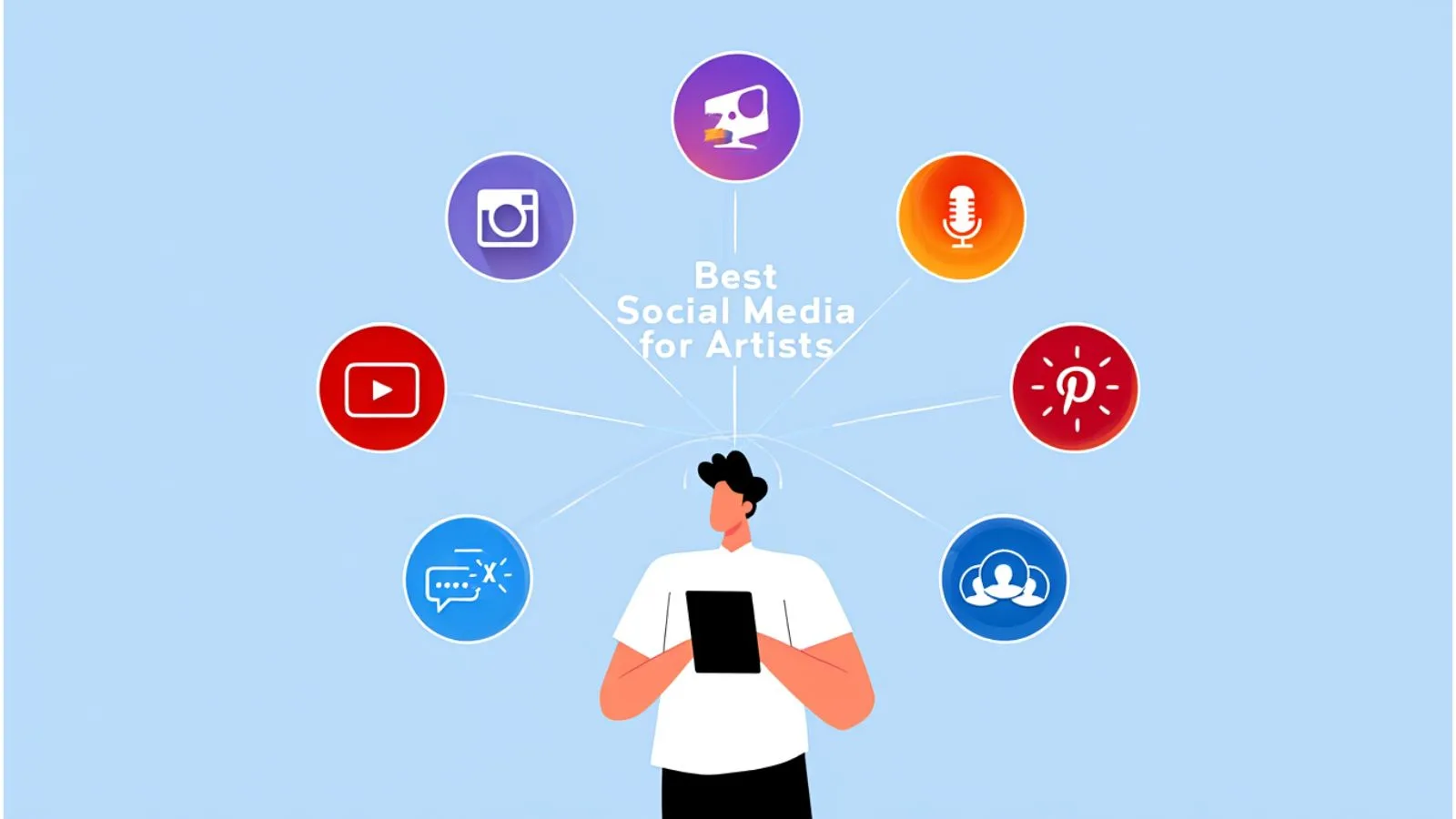
Social media for artists means using online platforms to share artwork, show creative processes, connect with art lovers, find clients, and promote creative businesses. The best approach is to choose platforms that fit your art, post useful content on a steady schedule, and guide interested people toward your portfolio, shop, or contact page.
For artists across the United States, social media offers a way to reach people beyond a local studio or gallery. A painter in New York can share new work with collectors in California. An illustrator in Texas can connect with design clients in Chicago. A photographer in Florida can promote local sessions and reach people who share an interest in their style. These connections can support both creative work and business goals.
A strong social media plan does not require an account on every platform. It starts with a clear goal and a simple way to show what makes your work worth seeing. Share finished pieces, works in progress, useful insights, and the stories behind your ideas. Then make it easy for people to find your portfolio, ask about a commission, or buy available work. Social media should support your art practice, not take the place of it.
Source: canadianprofessionpath.com
1. Understand Why Artists Need Social Media
Social media gives artists a public space to show their work and build relationships. It can help people discover a new artist without visiting a physical gallery. It can also help established artists stay connected with collectors, clients, students, and creative peers.
However, posting artwork is only one part of a useful strategy. Each account should have a clear purpose. An artist who wants to sell original paintings needs a different plan from an illustrator who wants freelance clients or a musician who wants more listeners.
Think of social media as a bridge between your creative work and the people who may value it. Your artwork attracts attention. Your story gives people a reason to connect. Your portfolio or shop gives them a clear next step.
Source: creativelattice.com
Build awareness
Introduce your work to people who may not know your name or artistic style. Share clear images and useful descriptions so new viewers can understand what you create.
Find potential buyers
Show available artwork, print collections, handmade products, and commission options. Include clear details about how interested buyers can contact you.
Connect with creative people
Meet other artists, photographers, designers, galleries, curators, and creative groups. These relationships may lead to useful feedback or future projects.
Show professional growth
Share exhibitions, completed projects, awards, workshops, collaborations, and other real milestones. These posts help visitors understand your experience.
Build a loyal audience
Give followers a reason to return. Share new work, useful lessons, creative decisions, and occasional updates from your studio.
Set Your Main Goal Before You Start
Choose one main result you want from social media. You can have other goals, but one clear priority makes planning much easier. It also helps you decide which posts deserve your time.
For example, a portrait artist may want more paid commissions. A ceramic artist may want to sell handmade pieces. A concept artist may want to show professional skills to game studios. Each artist needs content that supports a different next step.
For art sales
Show finished pieces, sizes, materials, prices when suitable, and links to your shop.
For commissions
Show past projects, explain your process, share commission terms, and provide a clear inquiry method.
For employment
Share selected projects, case studies, technical skills, and a professional portfolio.
For community
Share your creative journey, take part in useful discussions, and support other artists.
Connect Every Post to a Useful Next Step
A viewer may enjoy your painting but have no idea how to learn more about it. A short caption can solve that problem. Mention whether the work is available, part of a collection, or an example of your commission service.
Give people one clear action. They can visit your portfolio, join your mailing list, view your shop, or send a professional inquiry. Avoid adding too many competing instructions to one post.
Discovery
Help new people find your artwork through relevant topics, visual posts, and creative conversations.
Interest
Give viewers more context through process videos, artwork details, and project stories.
Action
Direct interested people to a shop, portfolio, commission page, or professional contact address.
2. Choose the Best Social Media Platforms for Your Art
The best social media platform depends on what you create and whom you want to reach. Some platforms are useful for visual discovery. Others work better for professional portfolios, long videos, or close community ties.
You do not need to maintain every account. Start with one main platform and one supporting platform. Learn how people use them before adding more. A focused account with useful posts is often easier to manage than several inactive accounts.
The following platforms offer different ways to present creative work. Their features and audiences can change, so review their current tools before building a long-term plan around a specific feature.
Source: fixthephoto.com
Instagram
Instagram works well as a visual showcase for painters, illustrators, photographers, sculptors, and makers. Use feed posts for finished artwork, carousels for details, Reels for short process clips, and Stories for studio updates. Keep your profile link connected to your portfolio or shop.
TikTok
TikTok suits artists who enjoy short videos and visual storytelling. Show a painting taking shape, a sculpture before and after, a drawing technique, or a quick studio tour. The format can help people discover your work, but views do not guarantee sales or commissions.
Pinterest
Pinterest can help artists share images that people save while planning projects, rooms, gifts, and creative ideas. It can suit wall art, illustrations, print collections, craft designs, and decorative work. Link each useful Pin to the related page on your website or shop.
YouTube
YouTube is useful for longer tutorials, demonstrations, studio visits, music performances, and detailed creative projects. It gives viewers more time to understand your skills and methods. Plan for the extra work involved in recording and editing longer videos.
Facebook
Facebook can support local art communities, exhibition announcements, workshops, art fairs, and customer groups. It may be useful for artists who work with local buyers or teach classes. Local groups can also help people find nearby creative events.
Behance
Behance is useful for designers, illustrators, photographers, and other professionals who want to present complete projects. Use it to explain the brief, creative choices, final result, and your role in the work.
ArtStation
ArtStation is worth considering for concept artists, game artists, character designers, environment artists, and 3D creators. It provides a focused place to present work related to entertainment and digital production.
LinkedIn
LinkedIn can support artists who want business clients, teaching work, design contracts, corporate projects, or professional partnerships. Share case studies and completed work rather than treating it like a personal photo feed.
Discord
Discord can support small creative communities, critique groups, workshops, and paid memberships. It works best when you already have people who want regular interaction. It is less suited to finding a completely new audience.
Build a Simple Platform Combination
A useful platform plan often has three parts. The first part helps people discover you. The second shows your work in a professional setting. The third gives interested people a stable way to contact you or follow your work.
For example, a painter might use Instagram for discovery, Pinterest for visual search, and a personal website for sales. A freelance illustrator might use Instagram for process posts, Behance for project examples, and LinkedIn for professional connections.
Choose platforms you can use well. If you dislike recording videos, you can still build a strong presence through photographs, carousels, written insights, and professional project pages.
Visual artists
Consider Instagram and Pinterest, with a personal portfolio as your main destination.
Digital designers
Consider Behance and LinkedIn, supported by a clear project portfolio.
Craft artists
Consider Instagram, Pinterest, and a shop that displays products and buying details.
Video-focused creators
Consider TikTok and YouTube, with a website for project details and contact.
3. Create a Professional Artist Profile
Your profile should help a new visitor understand who you are, what you create, and how to contact you. Think of it as a small digital studio entrance. People should know where they are and what they can find inside.
Use your real artist name or a consistent creative brand name. Choose a clear profile image or logo. Keep the same name and visual identity across your main accounts when possible.
Your biography should use simple words. State your art form, your main style or subject, and your location when it helps your audience. A city or region can help local buyers find you, but there is no need to publish your home address.
Source: pinterest.com
Choose a clear profile image
Use a recognizable portrait, studio image, or simple logo. Avoid tiny artwork details that are hard to see on a phone.
Write a useful biography
Explain your medium, the kind of work you create, and the audience or clients you serve.
Add a professional link
Send visitors to your website, portfolio, shop, or commission information page.
Include contact details
Provide a professional email or contact form. Make it easy for genuine buyers and clients to reach you.
Organize featured content
Pin your strongest work, useful introductions, commission details, and important announcements where the platform allows it.
Write an Artist Biography That Gets to the Point
A good biography does not need to tell your whole life story. It should give visitors enough information to understand your work. Use a natural tone and avoid long lists of vague creative terms.
For example, a painter might write: I create landscape paintings inspired by the American Southwest. I work mainly with acrylics and offer selected original pieces and commissions. This tells visitors what the artist makes and what they can do next.
Update your biography when your work or business changes. If you stop accepting commissions, remove that offer. If you begin teaching workshops, add the relevant information.
Who you are
Use your artist name or professional identity.
What you create
Name your medium, subject, or creative field.
Where you work
Add a public city or region when location matters.
What visitors can do
Mention available work, commissions, classes, or portfolio access.
Make Your Portfolio Easy to Explore
Social media is not a complete replacement for a professional portfolio. A personal website gives you more control over how your work is arranged and presented. It can also hold information that is difficult to organize in a social feed.
Group your work by medium, project, collection, or service. Include useful details such as artwork titles, dimensions, materials, and availability when appropriate. Make sure the pages work on mobile devices.
Show selected work
Display your strongest and most relevant pieces instead of uploading every project.
Explain your services
Give clear details about commissions, licensing, workshops, or design work.
Keep contact simple
Provide one clear way to ask questions or discuss a project.
4. Create Content That Shows Your Artistic Value
Good artist content does more than display a finished image. It helps viewers understand your ideas, skills, methods, and creative choices. A finished painting may catch someone’s eye, but a short look at the process can give that person a stronger reason to follow your work.
You do not need to invent a new subject for every post. One artwork can support several useful pieces of content. You might share the first sketch, a material choice, a close-up, the finished work, and a short explanation of the idea behind it.
The key is to keep each post useful and honest. Do not present an old project as new work. Do not claim a process was tested or completed if it was not. Let the quality and meaning of the work speak for themselves.
Source: websta.me
Finished artwork
Show the complete piece with good lighting, accurate color, and a short caption. Include the title, medium, and size when these details help the viewer.
Work in progress
Share sketches, early stages, material tests, or small changes that help explain how the piece developed.
Record painting, drawing, sculpting, editing, or other real studio activities. A simple phone video can be enough.
Artist stories
Explain what inspired a project, why you chose a subject, or what you learned while creating it.
Educational content
Share a useful technique, a material comparison, a beginner tip, or a lesson from your own creative practice.
Professional updates
Announce exhibitions, new collections, workshops, collaborations, and completed client projects.
Sales information
Show available originals, prints, handmade items, or commission openings. Provide accurate details and a clear buying path.
Use a Simple Content Mix
A balanced content plan helps your account feel useful rather than overly promotional. You can rotate between finished work, process, education, personal context, and business updates.
There is no required percentage for each type. Your mix should reflect your goals and your available time. A teaching artist may share more educational content, while a painter who sells originals may focus more on finished pieces and studio updates.
Show the result
Publish clear images of completed work. These posts help visitors judge your style and skill.
Show the journey
Share real steps and decisions behind your creative work. These posts help viewers understand your methods.
Share knowledge
Explain techniques and ideas that may help other artists or people who enjoy art.
Show your personality
Share selected studio moments, inspirations, and lessons without feeling forced to reveal your private life.
Invite action
Mention exhibitions, available work, classes, or commissions when you have something relevant to offer.
Write Captions That Give Artwork Context
A useful caption answers a question that a viewer may have. What is the artwork about? Which materials did you use? What part of the process was difficult? Is the work available?
Keep the first line clear. Add details that help people understand the piece. Finish with one natural question or action when it makes sense.
For example, you could write: This landscape study began with a quick sketch during a visit to the Arizona desert. I used layered acrylic washes to capture the warm light. The original is available through my portfolio.
Use clear descriptions
Name the artwork, medium, subject, or purpose instead of relying on vague promotional language.
Use relevant keywords
Include natural terms that describe your art, such as watercolor landscape, ceramic sculpture, or editorial illustration.
Add useful image descriptions
Use available alternative text tools and write clear descriptions for people who use screen readers.
Keep calls to action simple
Invite people to view the collection, visit your website, or ask about a specific piece.
Repurpose Content Without Making It Feel Repeated
You can use one creative project across several platforms. However, each platform may need a different presentation. A detailed project breakdown may work on a portfolio site, while a short process clip may fit a video feed better.
Create the original content from your own files. Then adjust the crop, caption, length, and format for each destination. Avoid copying another creator’s work or presenting someone else’s images as your own.
Instagram
Use a carousel to show stages, close-ups, and the final artwork.
TikTok
Use a short video with a clear beginning, creative process, and finished result.
Pinterest
Create a vertical image that links to the artwork or related portfolio page.
YouTube
Expand the same project into a longer demonstration or studio discussion.
5. Build a Posting Schedule and Engage With Your Audience
Consistency is more useful than a posting schedule that you cannot maintain. Choose a pace that fits your studio work, family life, client projects, and other duties. One or two thoughtful posts each week can be a practical starting point.
Plan content before you need it. Photograph finished pieces during good daylight. Save short process clips while you work. Write captions in one sitting and organize the files in folders. This reduces the time you spend creating posts at the last minute.
Social media is also a conversation. Reply to genuine comments, answer useful questions, and take part in relevant discussions. You do not need to reply to every random message or accept every invitation.
Source: fixthephoto.com
Choose a realistic schedule
Start with a small number of weekly posts. Increase the pace only when you can maintain the quality and time needed.
Batch your content
Take several photos, record short clips, and prepare captions during planned studio breaks.
Use a simple calendar
Assign different content themes to different days so you do not have to decide what to publish every morning.
Talk with your audience
Answer meaningful questions and show interest in people who support your work.
Review your results
Check which posts lead to meaningful conversations, portfolio visits, email signups, or sales.
A Practical Weekly Schedule for Artists
A simple weekly plan can keep your account active without making social media a full-time job. The following example is a starting point, not a rule. Adjust it to your medium and workload.
An artist who creates large paintings may need more time between finished-work posts. A digital illustrator may have more small projects to share. The schedule should follow your actual creative process.
Monday: Finished artwork
Share one completed piece with its title, medium, and a short explanation.
Wednesday: Creative process
Show a sketch, material choice, studio clip, or work-in-progress image.
Friday: Education or artist story
Share a useful lesson, an inspiration, or a short story about your creative practice.
Weekend: Community and updates
Respond to comments, share an exhibition update, or mention available work when relevant.
Measure Results That Support Your Goals
Follower numbers can show that an account is growing, but they do not explain whether the right people are finding your work. A smaller audience with genuine interest may be more useful than a large audience that never visits your portfolio.
Review results over several weeks. One post may perform poorly because of its subject, timing, image quality, or audience fit. Avoid changing your whole plan after one result.
Reach
Shows how many people saw your content. Use it to understand whether your posts are reaching beyond your current audience.
Saves and shares
Can suggest that viewers find your work useful, interesting, or worth showing to others.
Profile visits
Show whether a post encouraged people to learn more about you.
Website clicks
Help you see whether social media sends people to your portfolio or shop.
Inquiries
Show whether potential buyers, clients, or partners are taking a meaningful next step.
Sales and opportunities
Connect your social media work to actual business or professional outcomes.
What to Change When a Post Gets Little Attention
Low reach does not always mean that the artwork is weak. The image may be unclear, the caption may lack context, or the subject may not fit the audience on that platform. Review the post before deciding what to change.
Try a different image, a clearer opening line, or a more useful description. You can also test a different format. Keep the original artwork and message honest while improving how you present them.
Many views but few profile visits
Make the artwork and your artist identity easier to connect. Add a clear reason to visit your profile.
Many profile visits but few inquiries
Review your biography, portfolio link, pricing information, and contact options.
Website visits but few sales
Check whether product details, photographs, shipping information, and buying instructions are clear.
Good engagement but little growth
Continue building relationships and test content that helps new viewers understand your work.
6. Protect Your Artwork, Privacy, and Creative Energy
Sharing art online creates opportunities, but it also means placing images and personal information on services that you do not control. Take time to understand the rules of each platform. Keep copies of your original files and do not use social media as your only archive.
In the United States, copyright protection generally applies to original creative work once it is fixed in a tangible form. However, ownership and usage rights can depend on employment arrangements, certain commissioned-work rules, and written agreements. Selling a physical artwork does not automatically answer every question about reproduction and other uses.
Read platform terms before uploading work, especially if you are concerned about licensing or commercial use. Also review contracts with clients and galleries before sharing images of work that belongs to a private project or has not yet been released.
A watermark may discourage casual copying, but it cannot prevent every form of image theft. Keep high-resolution originals in secure storage. Share suitable preview files when a full-resolution image is not needed for public promotion.
Source: libori-eck.de
Keep original files
Save high-resolution images, source files, sketches, and project records in a separate backup system.
Review platform terms
Understand the licenses and permissions that apply when you upload artwork, photographs, music, or video.
Respect client agreements
Check confidentiality, release dates, ownership terms, and portfolio permissions before sharing commissioned work.
Use suitable image sizes
Avoid uploading large production files when a clear preview is enough to show the artwork.
Secure your accounts
Use strong passwords, two-factor authentication, and secure recovery details. Never share login codes with people who contact you unexpectedly.
Watch for payment scams
Be careful with suspicious commission offers, fake payment notices, unusual overpayments, and requests to pay unexpected fees.
Protect personal information
Use a professional email address and avoid publishing your home address, private phone number, or regular personal schedule.
Understand Copyright and Permission
Before posting artwork, understand what rights you own and what permissions you have given to other people. A social media upload does not remove the need to read the platform’s terms. A client contract may also limit when or how a project can be shown.
If someone uses your work without permission, save relevant records. Keep copies of the original files, publication dates, messages, and screenshots where useful. For a serious dispute, seek advice from a qualified intellectual property attorney.
If you work with brands, clearly identify paid or gifted promotions. Review current Federal Trade Commission guidance before publishing sponsored recommendations. Clear disclosure helps people understand the nature of the relationship.
Record your creative work
Keep dated files, drafts, and project records that help establish your creative process.
Check usage rights
Understand whether a client, employer, or partner has permission to use or publish the work.
Get permission for other people’s work
Do not assume that finding an image online gives you permission to repost or use it commercially.
Set Healthy Social Media Boundaries
Your creative practice needs time away from screens. Constantly checking views and comments can interrupt focused work. Set planned periods for publishing, replying, and reviewing results.
You also have control over how much of your personal life you share. You can build a warm and recognizable artist identity without showing your home, family, private routine, or every part of your day.
Block or report abusive accounts when needed. You do not have to accept disrespectful messages as part of being an artist online. A healthy community should support useful discussion and creative growth.
Set response hours
Choose specific times for checking messages and comments instead of remaining available all day.
Keep private details private
Share only personal information that you are comfortable making public.
Avoid unhealthy comparisons
Judge progress against your own goals rather than another artist’s follower count.
Protect studio time
Create and finish artwork before spending too much time planning posts about it.
7. A Simple 30-Day Social Media Plan for Artists
Starting with a short plan makes social media easier to manage. You do not need a large audience, expensive equipment, or a complex marketing system. You need a clear profile, useful artwork, and a steady way to share it.
Use the first month to learn what your audience responds to. Do not expect every post to perform well. Your goal is to build a repeatable process and collect enough information to make sensible changes.
Choose one main platform and one supporting platform. Set up your portfolio link before publishing. Then follow the weekly steps below.
Source: socinator.com
Week 1: Set your foundation
Choose your main goal, define your audience, select your platforms, and update your artist biography. Prepare a clear portfolio or shop link.
Week 2: Prepare your content
Select several strong artworks, photograph them, collect process images, and write short captions. Create a small content folder for future posts.
Week 3: Publish and connect
Share finished artwork, a process post, and an educational or personal update. Reply to useful comments and take part in relevant art discussions.
Week 4: Review and improve
Check profile visits, saves, shares, website clicks, and genuine inquiries. Identify the content that helped you reach your main goal.
Questions to Answer After Your First Month
A useful social media strategy should cover more than the first post. Artists also need a plan for what happens when people show interest. These practical next-step questions are based on the reader’s journey, not claims about measured search demand.
Use the answers to improve your profile, content, and business process. The goal is to make each step clear for both you and the people who want to work with you.
Before publishing: What should people know?
Make sure your artwork has enough context. Include the medium, subject, title, and other details that help viewers understand the piece.
After someone shows interest: Where should they go?
Provide a portfolio, shop, email signup, or contact page that matches the purpose of the post.
Before accepting a commission: What terms apply?
Prepare clear information about prices, deposits, timelines, revisions, delivery, and usage rights.
After a sale: How will you follow up?
Confirm payment, shipping or collection details, delivery expectations, and any agreed customer updates.
After reviewing performance: What should change?
Keep the content that attracts relevant people. Improve weak links in the journey instead of chasing every new platform trend.
Signs Your Strategy Is Working
Early progress may look different for every artist. One person may receive more commission inquiries. Another may gain useful connections with galleries or creative businesses. A third may see more visitors reaching a portfolio or shop.
Look for steady signs of interest rather than one large spike in views. Your strategy is moving in a useful direction when the right people understand your work, return to your account, and take actions that support your goals.
If you see little progress, review your audience, profile, content quality, and next-step links. Make one or two changes at a time. Give each change enough time to produce useful information.
Better audience fit
More people who are interested in your medium, style, services, or subject begin following your work.
More meaningful conversations
People ask relevant questions about your methods, artwork, prices, exhibitions, or services.
More professional opportunities
You receive suitable invitations, client inquiries, workshop requests, or collaboration offers.
A manageable routine
You can maintain your posting plan without reducing the time and care you give to creating art.
Frequently Asked Questions
Q
Do artists need to show their faces on social media?
No. Artists can build a professional presence without showing their faces. You can share finished artwork, hands-on demonstrations, studio details, voice explanations, and written stories. A recognizable artist identity can come from your work, visual style, and communication.
Q
Is it a good idea to share unfinished artwork?
Yes, when sharing the process supports your goals. Work-in-progress images can help viewers understand how an artwork develops. They can also create useful conversations about materials and creative choices. However, keep private projects, confidential client work, and unreleased collections private until you have permission to share them.
Q
Should artists put watermarks on social media images?
A watermark can identify the artist and discourage some casual copying. However, it cannot guarantee protection against image theft. Use clear preview images, retain high-resolution originals, and keep records of your work. A small signature or subtle watermark is often less distracting than a large mark across the artwork.
Q
Can artists use social media instead of a portfolio website?
Social media can display artwork, but a portfolio website gives artists more control over presentation and information. A website can organize collections, project details, services, contact options, and buying information in one place. Using both can create a clearer path from discovery to a professional inquiry.
Q
How should an artist respond to a commission request?
Start by asking about the client’s idea, intended use, size, medium, budget, and deadline. Then provide a written estimate with payment terms, deposit requirements, revision limits, delivery details, and agreed usage rights. Confirm the terms before starting work. Use a secure payment method and be cautious about unusual payment requests or overpayment offers.
✦ Wrapping Up
Conclusion
Social media for artists works best when it supports a clear creative and professional goal. The right platform can help people discover your work, understand your process, and connect with you. A useful profile, strong artwork images, thoughtful captions, and steady communication can make that process easier.
You do not need to post every day or join every network. Start with one or two platforms that suit your art and your audience. Share finished work, show selected creative steps, and provide a clear way to explore your portfolio or contact you. Review your results and improve your plan as you learn.
Most importantly, protect your time and creative energy. Social media should help you share your artistic voice, not control your entire working day. Build a routine that leaves enough room for the work that matters most: creating art.
💡 Key Takeaway
Start today by choosing one main social media platform, updating your artist biography, and preparing three useful posts: one finished artwork, one behind-the-scenes look, and one post that explains what you offer. Link your profile to a professional portfolio or shop, then review your results after 30 days.