For artists in the United States, selling art on Etsy starts with choosing original artwork, opening a shop, creating clear product listings, setting prices that cover all costs, and building a reliable plan for delivery and customer service.
Etsy gives independent American artists a way to reach people who shop for creative goods. You can offer original paintings, drawings, illustrations, art prints, and eligible digital downloads. You can also sell your own designs through approved production partners. The best starting point is a small collection of work that has a clear style and a well-defined buyer.
Running an Etsy shop involves more than uploading pictures. You need to understand marketplace rules, copyright, listing fees, payment processing, product photography, and shipping. These details affect both your earnings and the buyer’s experience. A well-planned shop makes it easier to manage orders without losing time for your art.
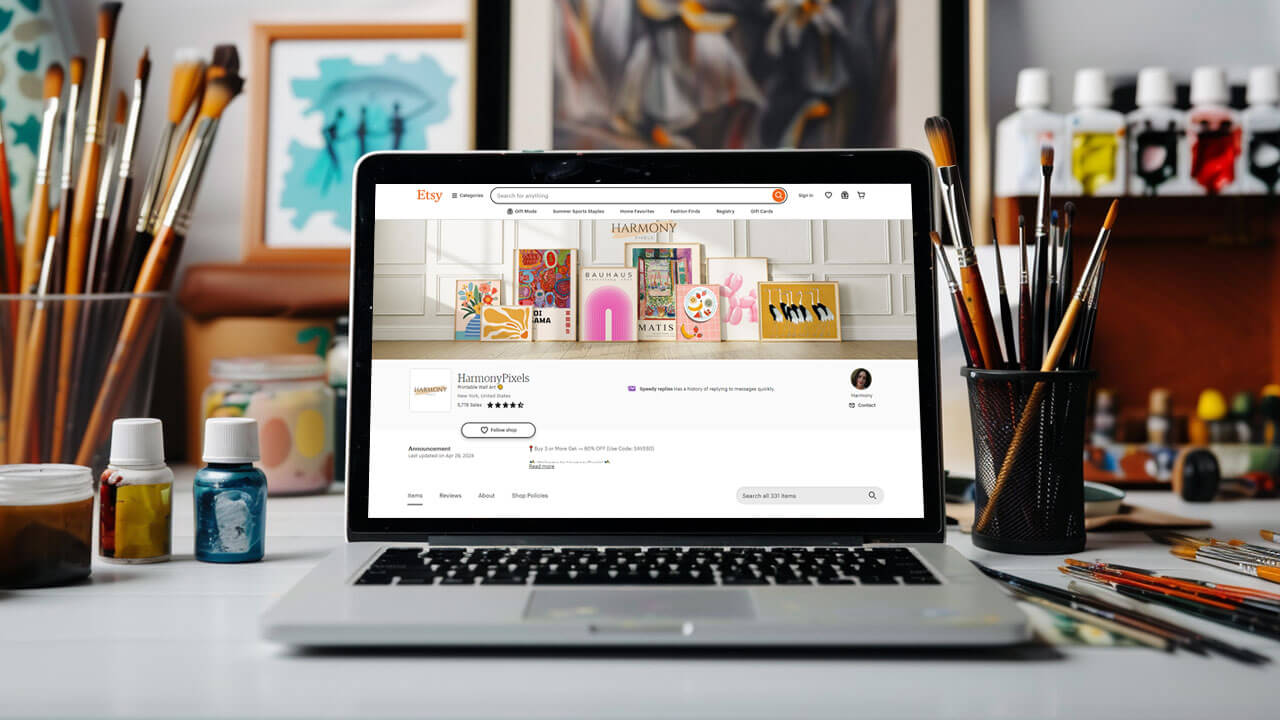
Source: gelato.com
1. Understand What Art You Can Sell on Etsy
Etsy is designed for creative products with a clear connection to the seller. Artists can sell work they make, original designs they create, and certain products made with help from production partners. Mass-produced products that a seller simply buys and resells do not qualify as handmade art.
Start by deciding what you want to offer. Your choice affects the tools you need, your prices, your listing details, and the time required to fulfill each order.
Etsy groups eligible products into categories such as made by a seller and designed by a seller. Its rules also cover selected vintage goods and creative supplies. For an art shop, the first two groups are usually the most relevant.
Source: pinterest.com
Original paintings and drawings
Sell paintings, sketches, watercolor work, oil paintings, ink drawings, and mixed-media pieces that you create. State whether each piece is an original or a reproduction.
Art prints and posters
Offer reproductions of your original work. You may print them yourself or use a production partner to print and ship your original designs.
Digital artwork
Sell original printable wall art, illustrations, wallpapers, and other eligible digital designs. Buyers receive files rather than a physical product.
Custom artwork
Offer eligible made-to-order work, such as original pet portraits, family illustrations, or personalized drawings. Explain the process and delivery terms before accepting an order.
Art-based products
Use your original designs on products such as greeting cards, stationery, and home decor. Disclose production partners when required.
Follow Etsy’s Creativity Standards
Etsy requires products to meet its Creativity Standards. A physical artwork may qualify when you make it by hand or produce it with your own tools. An original design may also qualify when a third party prints or makes the finished product.
If you use a print-on-demand company, you must identify it as a production partner in the relevant listings. You must also give accurate details about where the product is made and shipped from.
Etsy allows certain seller-prompted AI creations when they meet its rules. Sellers must disclose AI use in the listing description. AI prompt bundles and certain automatically generated content are not allowed. Read the current policy before listing AI-assisted work.
Create original work
Use your own artwork and designs. Do not present another artist’s work as your creation.
Disclose production help
Add the required production partner details when another business makes or prints your original design.
Respect intellectual property
Avoid unauthorized characters, logos, brand names, song lyrics, and copyrighted images.
Choose a Product Type That Fits Your Work
Original paintings suit artists who enjoy making one-of-a-kind pieces. Prints suit artwork that can be reproduced without losing its appeal. Digital files work well when buyers want an immediate download and you want to avoid physical shipping.
You do not need to offer every type at once. Start with the format that you can produce well and deliver on time. Add other formats after you understand buyer interest and your real costs.
Best for original artists
One-of-a-kind paintings, drawings, and signed works.
Best for repeat production
Art prints and products made from your original designs.
Best for digital creators
Printable artwork and eligible downloadable designs.
2. Research Your Market Before Opening Your Shop
A little market research can help you avoid making products that are difficult to sell. It also helps you understand how buyers describe the art they want. Start with a few products that match your skills and study similar items on Etsy.
Look at shops that sell work in a style or medium close to yours. Study their product sizes, materials, photo styles, descriptions, and price ranges. This is research, not a reason to copy another artist’s work or branding.
Pay attention to the buyer behind each product. Someone buying a small print for a home office may have different needs from someone buying an original painting as a wedding gift. Your product details should reflect those differences.
Source: marketyourart.net
Study competing products
Compare similar artwork, sizes, formats, materials, prices, shipping costs, and personalization options.
Look for useful gaps
Notice whether buyers need clearer size guides, better color information, more print sizes, or custom options.
Identify your buyer
Think about the room, event, gift, or personal interest that may lead someone to purchase your artwork.
Build a recognizable style
Choose a consistent visual direction without forcing every artwork to look the same.
Check Demand Without Chasing Every Trend
Use Etsy search suggestions to explore phrases related to your artwork. Try terms for the medium, subject, color, size, and intended use. These suggestions can help you understand how shoppers describe products.
For example, an artist selling watercolor landscapes might explore phrases related to nature wall art, mountain prints, or coastal paintings. These are starting points for research, not proof that a product will sell.
Avoid changing your artistic direction every time you see a popular item. A strong shop needs a clear identity. Trends can inform product ideas, but your creative strengths should guide the final decision.
Compare similar work
Use products with similar size, quality, and format when reviewing prices.
Check buyer questions
Look at product reviews and questions to find details that buyers may want before ordering.
3. Open and Set Up Your Etsy Shop
Once you have a product plan, create your Etsy seller account and follow the shop setup process. Etsy will ask for information such as your shop preferences, location, payment details, and other required seller information. Have your banking and identity details ready.
Choose your shop language, country, and currency with care. These settings help establish how your shop operates and how buyers see your products. Sellers should also check whether Etsy Payments and seller registration are available in their country.
Your shop name should be easy to read and remember. Choose a name that fits your art style without limiting your future product range. Check availability before building your branding around it.
Source: youtube.com
Create your seller account
Register with Etsy and complete the required seller verification and payment setup steps.
Choose a shop name
Use a short, clear name that reflects your creative identity and is easy to spell.
Add your shop logo and banner
Use clean images that help buyers recognize your art and understand your visual style.
Write an About section
Explain what you create, what inspires your work, and how your artwork is made.
Set shop policies
Explain shipping, processing times, returns, exchanges, cancellations, and how buyers can contact you.
Build Trust With a Complete Shop Profile
Buyers cannot visit your studio before placing an order. Your shop profile gives them a way to understand who makes the art and how the business works.
Use a short, honest artist biography. Add real studio photos or images of your creative process when possible. Explain whether you paint by hand, work digitally, make prints, or use a production partner.
Keep your contact information and shop policies clear. Set a realistic processing time that allows you to finish, pack, and ship each order. Do not promise delivery dates that depend on conditions outside your control.
Show your process
Share genuine images of your workspace, materials, sketches, or production steps.
Use clear policies
Make sure buyers understand what happens if an order is delayed, damaged, or unsuitable.
Keep information current
Update your shop when your products, processing times, or shipping arrangements change.
4. Create Art Listings That Help Buyers Make a Decision
A good Etsy listing explains exactly what the buyer will receive. It should answer basic questions about the artwork before someone needs to send you a message. Clear details can reduce confusion and help buyers compare your work with other options.
To create a listing, open Shop Manager, select Listings, and choose Add a listing. Complete the product details, add photos or videos, choose the correct category, enter pricing and shipping information, and publish when everything is ready.
Etsy allows up to 20 listing photos and two short videos. Digital listings can include up to five downloadable files. Check the current file size and format rules before uploading your digital products.
Source: etsy.com
Choose the correct category
Select the category that best describes the artwork. Accurate categories help buyers browse and filter products.
Write a clear title
Name the artwork type and add important details such as its subject, color, material, or size.
Complete product attributes
Add relevant information about the medium, color, dimensions, orientation, and other available attributes.
Add relevant tags
Use up to 13 accurate tags that reflect the subject, medium, style, buyer, or intended use.
Write a useful description
Explain the materials, dimensions, finish, delivery format, and what is included with the purchase.
Write Titles for People, Not Just Search Engines
Etsy listing titles can contain up to 140 characters. Current guidance favors clear and readable titles over long strings of repeated keywords. State what the product is and place its most useful details near the beginning.
For example, a title such as Watercolor Mountain Landscape Print, Blue and Green Wall Art is easier to understand than a long list of repeated search phrases. The first title tells buyers what the item is and what makes it distinct.
Use the tags, attributes, and description to add other relevant search terms. You do not need to repeat the same phrase many times. Focus on accurate wording that matches the actual product.
Use specific terms
Describe the artwork type, subject, color, material, and size when these details matter.
Avoid keyword stuffing
Do not repeat the same words or add unrelated popular searches.
Write for quick reading
Help buyers understand the product without making them work through a crowded title.
Write Descriptions That Prevent Confusion
Begin with a direct description of the artwork. Then list its dimensions, medium, materials, and finish. State whether the item is an original, a limited edition, an open edition, or a digital reproduction.
For framed work, explain whether the frame is included. For unframed prints, say so clearly. Mention any natural variations in handmade products, such as small changes in texture or color.
Digital listings need extra care. State the file formats, image ratios, resolution, and available sizes. Explain that the buyer will receive a download rather than a physical print. Include simple printing instructions when useful.
If a product is made to order, explain the production time. If it is personalized, tell buyers what details you need and what they can expect after placing an order.
Describe the physical item
Include dimensions, materials, finish, framing, and packaging details.
Explain digital delivery
List the file types, ratios, sizes, and whether printing is included.
Set custom order limits
Explain the number of revisions, personalization choices, and expected completion time.
5. Photograph Your Artwork Clearly
Product photos help buyers judge artwork that they cannot touch or inspect in person. They need to see the colors, texture, size, and finish before spending money. Clear images also help your work look professional without making it appear different from the item they will receive.
Use your own photographs of the finished product. Choose soft natural light when possible. Place the artwork against a simple background and keep the camera level to avoid distortion.
Etsy recommends high-resolution listing images, with a primary photo around 2,000 pixels or more in width and height. A clear first image is especially useful because it becomes the main visual buyers see when browsing.
Source: graphicfolks.com
Photograph the complete artwork
Show the full piece without cropping important parts or hiding its edges.
Include close-up images
Show brush marks, paper texture, canvas details, signatures, or other features.
Show the artwork in a room
Use a lifestyle image to help buyers understand how the piece may look in a home or office.
Add a size reference
Show the work beside a familiar object or provide a clear dimensions graphic in a secondary image.
Keep colors accurate
Adjust exposure and white balance carefully. Do not edit the image so much that the artwork looks unlike the real product.
Build a Useful Photo Sequence
Think of your listing images as a short visual tour. The first image should show the artwork clearly. Later images should answer questions about size, texture, framing, and packaging.
For an original painting, show the front, close details, edges, and signature. For a print, show the paper surface, available sizes, and a room display. For digital art, show a preview of the design and a clear explanation of the files included.
Avoid using a collage as the main thumbnail when a single image can show the finished product better. Buyers should be able to recognize the artwork at a small screen size.
Photo one
Show the complete artwork with a clean and simple background.
Photo two
Show a close-up of the surface, texture, or fine details.
Photo three
Show the artwork in a room or realistic display setting.
Photo four
Show dimensions, framing, or available product options.
Photo five
Show packaging or other details that help buyers understand the finished purchase.
6. Price Your Artwork and Understand Etsy Fees
Your selling price should cover the full cost of making and delivering the artwork. A low price may attract attention, but it can leave you with little profit after materials, labor, fees, packaging, and shipping.
Start by adding your direct costs. Then include a fair amount for your time, business expenses, and desired profit. Compare the result with similar artwork, but do not copy another seller’s price without checking the differences in quality, size, and production.
Etsy charges several types of fees. The figures below were checked on November 22, 2026, for sellers with a United States bank account. Fees can change, so check Etsy’s current fee schedule before publishing or changing your prices.
Source: acrylicpouring.com
Listing fee
Etsy charges $0.20 USD for each listing. A listing normally lasts four months, and another listing fee applies when it renews.
Transaction fee
Etsy charges 6.5% of the total order amount. This includes the item price and amounts charged for shipping and gift wrapping.
Payment processing fee
For a United States bank account, the standard Etsy Payments processing fee is 3% plus $0.25 USD per order. It applies to the total sale amount, including shipping and applicable sales tax.
Offsite Ads fee
Attributed orders may incur a 15% fee when the shop has made less than $10,000 USD in any consecutive 365-day period, or 12% after reaching that threshold. The fee is capped at $100 USD per order.
Other possible costs
A shop setup fee may apply. Other costs can include Etsy Ads, shipping labels, currency conversion, subscriptions, and production services.
Calculate Your Full Cost Before Setting a Price
Use a simple cost formula to build your starting price. Include every expense that changes when you make or sell an item. For original artwork, this may include paint, canvas, brushes, framing, studio supplies, and the time spent creating the piece.
For prints, include the printing cost, packaging, production partner charge, and any shipping expense you cover. For digital art, include design time, software, file preparation, and other business costs.
A useful starting formula is materials plus labor plus packaging plus platform fees plus overhead plus profit. Review the price when your costs change or when you learn more about what buyers are willing to pay.
Materials
Add the cost of paint, paper, canvas, ink, frames, and other supplies.
Labor
Pay yourself for the time spent creating, editing, packing, and managing the order.
Business expenses
Include software, equipment wear, workspace costs, and other regular expenses.
Profit
Add a reasonable amount that supports the future growth of your art business.
A Simple Etsy Fee Example
Imagine that you sell an art print for $100 and charge $8 for shipping. The order total is $108 before any applicable sales tax. The following calculation uses the standard United States Etsy Payments rate and assumes one listing fee.
The 6.5% transaction fee is $7.02. The payment processing fee is $3.49, based on 3% of $108 plus $0.25. Add the $0.20 listing fee, and the estimated Etsy fees total $10.71.
You would have $97.29 remaining before paying the actual shipping cost, packaging, production, labor, and other business expenses. This is not your final profit. It is a starting point for understanding how marketplace charges affect your earnings.
Item price
$100.00 USD.
Shipping charged to buyer
$8.00 USD.
Transaction fee
$7.02 USD.
Payment processing
$3.49 USD.
Listing fee
$0.20 USD.
Remaining before other costs
$97.29 USD.
Understand Offsite Ads Before You Scale
Etsy’s Offsite Ads program promotes eligible listings on external websites and platforms. A fee applies when a buyer clicks an attributed ad and purchases from your shop within the stated attribution period.
Sellers below the $10,000 USD revenue threshold can opt out of Offsite Ads. Once a shop reaches $10,000 USD in revenue within a consecutive 365-day period, participation becomes mandatory under Etsy’s policy.
The extra fee can affect low-priced art prints and products with small profit margins. Include this possible cost when deciding how much to charge. Do not assume every sale will have the same fee.
Track advertising charges
Review the Offsite Ads dashboard to see which orders received an advertising fee.
Protect your margin
Check whether your product remains profitable after an attributed advertising charge.
Review your eligibility
Check the current opt-out rules and revenue threshold in your Etsy account.
7. Package and Ship Physical Artwork Safely
Good packaging protects your work and gives buyers confidence in your shop. Art can be damaged by moisture, pressure, bending, and rough handling. Choose packaging based on the artwork’s size, weight, material, and value.
Before setting a shipping price, measure and weigh the packed product. Include the mailer or box, protective materials, and any extra inserts. Compare available carrier services and use realistic delivery estimates.
For United States orders, sellers may compare available USPS, UPS, and FedEx services. The right option depends on package size, destination, delivery speed, tracking, and insurance needs. Check current carrier rates before promising a shipping price.
Source: outfy.com
Protect unframed prints
Place prints in a protective sleeve with a rigid backing board. Use a firm mailer to reduce bending.
Protect framed artwork
Cover corners, protect glass, add padding, and use a strong box with enough space for cushioning.
Protect canvas paintings
Wrap the surface with suitable protective material and use a sturdy box to prevent pressure on the canvas.
Use tracking when suitable
Choose tracked shipping for valuable work so you can monitor the parcel and respond to delivery issues.
Keep packing records
Photograph high-value orders before sealing the package. Save tracking and shipping records.
Create a Repeatable Packing Process
Prepare a standard packing method for each product type. Keep the required sleeves, boards, boxes, tape, and labels in one place. This saves time when several orders arrive close together.
Do not place loose tape directly on an artwork’s surface. Avoid packaging that presses against wet paint, delicate paper, or raised details. Make sure the artwork cannot move freely inside the box.
For international orders, check customs forms, destination restrictions, and possible import charges. Explain which costs are paid by the buyer when applicable. Do not promise that customs delays will never occur.
Test your packaging
Check that the artwork stays secure during normal handling and movement.
Set realistic processing times
Allow enough time for drying, framing, printing, packing, and order preparation.
Prepare a damage response
Keep order photos and shipping records so you can investigate a damaged or missing parcel.
8. Deliver Digital Art and Manage Custom Orders
Digital art has a different delivery process from physical artwork. Buyers download the files after purchase, so you do not need to prepare a parcel or arrange shipping. However, the files must be clear, complete, and ready for the buyer to use.
Prepare your files before creating the listing. Check the image quality, dimensions, file format, and print ratios. Use clear file names so buyers can identify each size without guessing.
Custom art needs a clear agreement about the work. Explain the subject, style, dimensions, delivery format, completion time, and revision limits. These details help prevent disputes about what the buyer expected.
Source: uk.pinterest.com
Prepare high-quality files
Check resolution, color, image dimensions, and supported file types before uploading.
Explain printing options
Tell buyers whether they can print at home or should use a professional print service.
Set clear custom terms
Describe the information you need, the expected timeline, and the number of revisions included.
Keep original files safe
Store backups of your artwork and final files in a secure location.
Make Digital Downloads Easy to Use
A buyer may not know how to resize or print a digital artwork. A short instruction sheet can explain the included file sizes, print ratios, and basic printing steps.
Make it clear that a digital download is not a physical print. Show an accurate preview of the artwork and list every file included with the purchase.
Consider the buyer’s intended use. Personal wall art may need different file options from a design made for cards or other creative projects. State the permitted use of your files and do not promise rights that you do not own.
Use clear file names
Name each file by its size or ratio so buyers can choose the right version.
Include simple instructions
Explain how to access and print the files without making claims about every printer.
Check every upload
Open each file and confirm that it works before publishing the listing.
9. Promote Your Etsy Art Shop and Improve Sales
Publishing a listing does not guarantee that buyers will find it. You need to help the right people discover your work and give them a reason to trust your shop. Start with clear listings and consistent communication before spending money on advertising.
Use social media to show your creative process, finished pieces, new collections, and product details. Short videos can show how a painting develops or how a print looks in a real room. Pinterest can also help people save and revisit visual ideas.
Keep your visual identity consistent. Use a recognizable style in your photos, shop banner, packaging, and social posts. Buyers should be able to recognize your work without seeing your shop name every time.
Source: marketsy.io
Share your creative process
Post sketches, painting stages, studio updates, and finished work.
Build a social presence
Use suitable channels such as Instagram, Pinterest, and other platforms where your likely buyers spend time.
Create themed collections
Group related artwork so shoppers can explore pieces with a similar subject or style.
Update seasonal products
Prepare suitable art for holidays, weddings, home updates, and other relevant buying periods.
Communicate with buyers
Answer questions clearly, provide order updates, and handle problems in a professional way.
Use Etsy Search and Shop Statistics
Etsy search uses several listing and shop signals. These can include titles, tags, attributes, descriptions, the first photo, reviews, and customer service. A clear title alone cannot guarantee a high position in search.
Use all relevant tags and attributes. Review the search terms that bring visitors to your shop. If a listing receives little traffic, check whether its wording matches the actual artwork and the way buyers search for it.
The most useful improvement depends on the problem. Changing every title, price, and photo at once makes it hard to understand what helped. Make one or two clear changes and review the results over time.
Few views
Review your product category, tags, title, and search relevance. Check whether buyers can understand what the product is.
Views but few clicks
Improve the first photo and make the title more specific. Compare the thumbnail with similar products.
Clicks but no sales
Check the price, shipping charge, product description, size options, delivery time, and shop policies.
Sales but little profit
Review your materials, production costs, shipping, platform fees, advertising charges, and labor.
Repeat customer questions
Add the missing information to your photos or description so future buyers can find it easily.
Use Paid Advertising With Care
Etsy Ads can place listings in designated advertising areas. You can also use external marketing to send people to your shop. Both approaches can create extra costs, so begin with a clear budget.
Before paying for ads, check that your listings have good photos, accurate details, fair prices, and a clear delivery plan. Advertising a confusing listing may bring more visitors without solving the reason they do not buy.
Measure the results rather than judging an ad by views alone. Compare advertising costs with the sales and profit that result. Stop or adjust campaigns that do not support your business goals.
Start with a small test
Use a limited budget and promote products with clear demand and healthy margins.
Review actual orders
Look at sales and fees rather than clicks alone.
Avoid false promises
Do not claim guaranteed results, fake scarcity, or guaranteed search placement.
10. Avoid Common Mistakes When Selling Art on Etsy
Many problems in an art shop come from unclear listings, weak cost planning, or a lack of attention to marketplace rules. A few simple checks can prevent avoidable issues before they affect your customers or income.
Do not use another artist’s work, a popular character, or a company logo without the necessary rights. Adding a disclaimer does not automatically give you permission to use protected material. If a design may infringe another person’s rights, seek legal advice before selling it.
Avoid treating digital downloads as guaranteed passive income. You still need to create original work, prepare files, answer questions, update listings, and manage customer issues. Digital delivery reduces shipping work, but it does not remove the need to run a business.
Ignoring copyright
Using protected characters, logos, lyrics, or images without permission can lead to listing removal and other legal problems.
Underpricing artwork
Forgetting labor, materials, platform fees, and packaging can make a sale unprofitable.
Using misleading photographs
Heavy editing or inaccurate mockups can create false expectations about colors, texture, or size.
Hiding production partners
Disclose third-party production help when Etsy requires it.
Ignoring customer messages
Slow or unclear replies can harm trust and make order problems harder to solve.
Buying fake reviews
Do not manipulate reviews, sales, clicks, or other marketplace activity.
Keep Business and Tax Records
Artists selling in the United States should keep records of sales, fees, refunds, materials, advertising, equipment, and other business expenses. These records help you understand whether the shop is profitable.
Etsy may collect and remit marketplace sales tax where required. That does not remove every tax duty for the seller. Income tax, business registration, and local rules depend on your situation and location.
Use current IRS and state guidance when handling tax matters. A qualified tax professional can help if you have questions about business structure, deductible expenses, estimated payments, or state requirements.
Save financial records
Keep order reports, fee statements, receipts, shipping costs, and refund records.
Separate business spending
Use clear records to distinguish art business costs from personal expenses.
Check local rules
Review relevant business registration and tax requirements in your state and city.
11. Create a Simple Launch Plan for Your First Month
A simple launch plan helps you focus on the tasks that matter. You do not need a large collection or expensive equipment to begin. You need a clear product, accurate information, and a way to fulfill orders.
Use the first month to learn how buyers respond to your work. Do not judge the whole business from one listing or a few days of activity. Give each useful change enough time to produce information before making another major change.
Week one: Prepare
Choose your art format, review Etsy’s rules, research similar products, calculate costs, and prepare a small collection.
Week two: Build
Open your shop, complete the profile, photograph your products, write descriptions, and publish your first listings.
Week three: Promote
Share your work on relevant social platforms, answer buyer questions, and review your shop statistics.
Week four: Improve
Review views, clicks, orders, fees, and customer questions. Improve the weakest part of your shop before adding more products.
Know When Your Shop Is Ready
Your shop is ready for its first buyers when each listing clearly explains what is being sold, how it is made, what the buyer receives, and how it will be delivered. Your prices should cover expected costs, and your shop policies should match what you can actually provide.
If you are not receiving sales, do not assume that your art has no market. First check the number of visitors, the quality of your main photos, the relevance of your search terms, and the clarity of your product information.
If orders are arriving faster than you can complete them, update processing times and inventory. A manageable shop is better than a busy shop that cannot meet its promises.
Ready to publish
All photos, product details, prices, files, and policies are complete.
Ready to fulfill
You have the materials, time, packaging, and shipping method needed for orders.
Ready to improve
You can review shop data and make changes based on real buyer behavior.
Frequently Asked Questions
Q
Can beginners sell art on Etsy?
Yes. Beginners can open an Etsy shop if their products meet the marketplace rules. You do not need to be a famous artist or have a large social media following.
Start with a small collection of work you can make and deliver well. Use clear photographs, honest descriptions, fair prices, and reliable customer service. Learn from buyer responses before expanding.
Q
Can I sell art made with AI on Etsy?
Etsy allows certain seller-prompted AI creations when the seller contributes original creative input and follows its Creativity Standards. You must disclose the use of AI in the listing description.
Not every AI-generated product qualifies. Some forms, such as AI prompt bundles and certain automatically generated content, are prohibited. Check Etsy’s latest AI and Creativity Standards before publishing.
Q
Can I sell fan art on Etsy?
Fan art can raise copyright and trademark issues. Using a popular character, movie image, sports logo, or brand name without permission may violate someone else’s intellectual property rights.
Calling a product fan art or adding a disclaimer does not automatically make the use legal. Obtain the necessary permission or create original artwork that does not rely on protected material.
Q
How many art listings should I start with?
There is no fixed number of listings required to open a shop. A small, focused collection is a practical way to test your products and learn how buyers respond.
Make sure each listing offers a clear product and serves a real purpose. Add more products as you develop new work, learn which formats interest buyers, and build a manageable production process.
Q
Is selling art on Etsy profitable?
It can be profitable, but income varies by artwork, demand, pricing, production costs, competition, and marketing. Opening a shop does not guarantee orders or a steady income.
Calculate your full costs before setting prices. Track the money left after platform fees, materials, labor, advertising, and shipping. Use those figures to decide which products are worth continuing or improving.
✦ Wrapping Up
Conclusion
Selling art on Etsy can help American artists reach buyers who value original and creative products. The process begins with work that meets Etsy’s rules, a clear shop identity, and listings that explain exactly what customers will receive. Good photographs and honest descriptions help buyers understand the value of each piece.
A successful shop also needs careful pricing, reliable delivery, and steady attention to customer needs. Remember to include marketplace fees, production costs, and your time when calculating profit. Review your shop data and improve one part of the buying experience at a time.
You do not need to build a large art business on your first day. Start with work you believe in, prepare each listing with care, and grow at a pace you can manage. Consistent effort and clear business decisions give your creative work a better chance to find the right buyers.
💡 Key Takeaway
Choose three to five original artworks, calculate their full selling costs, prepare clear photographs and descriptions, and publish your first Etsy listings with accurate policies and realistic delivery times.