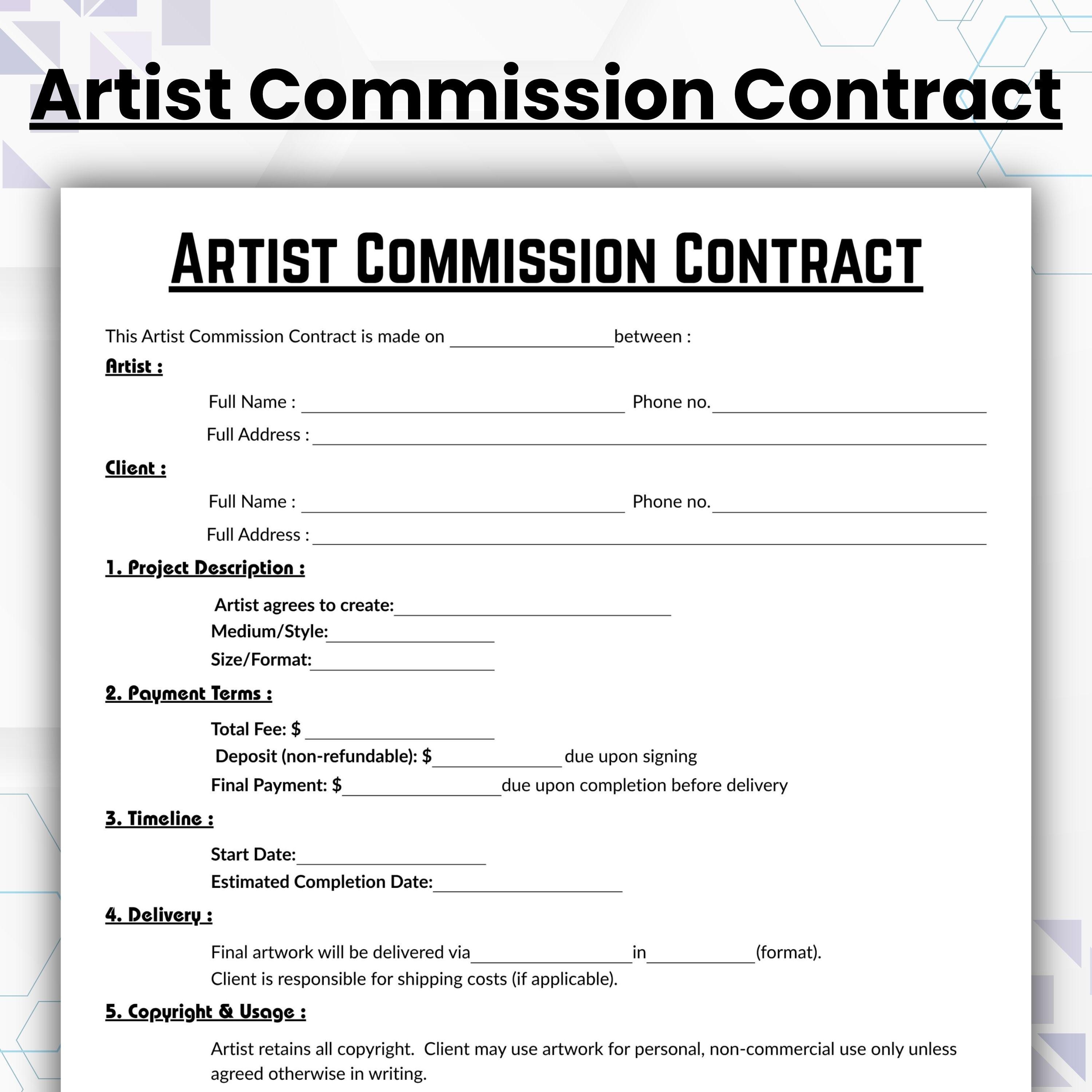
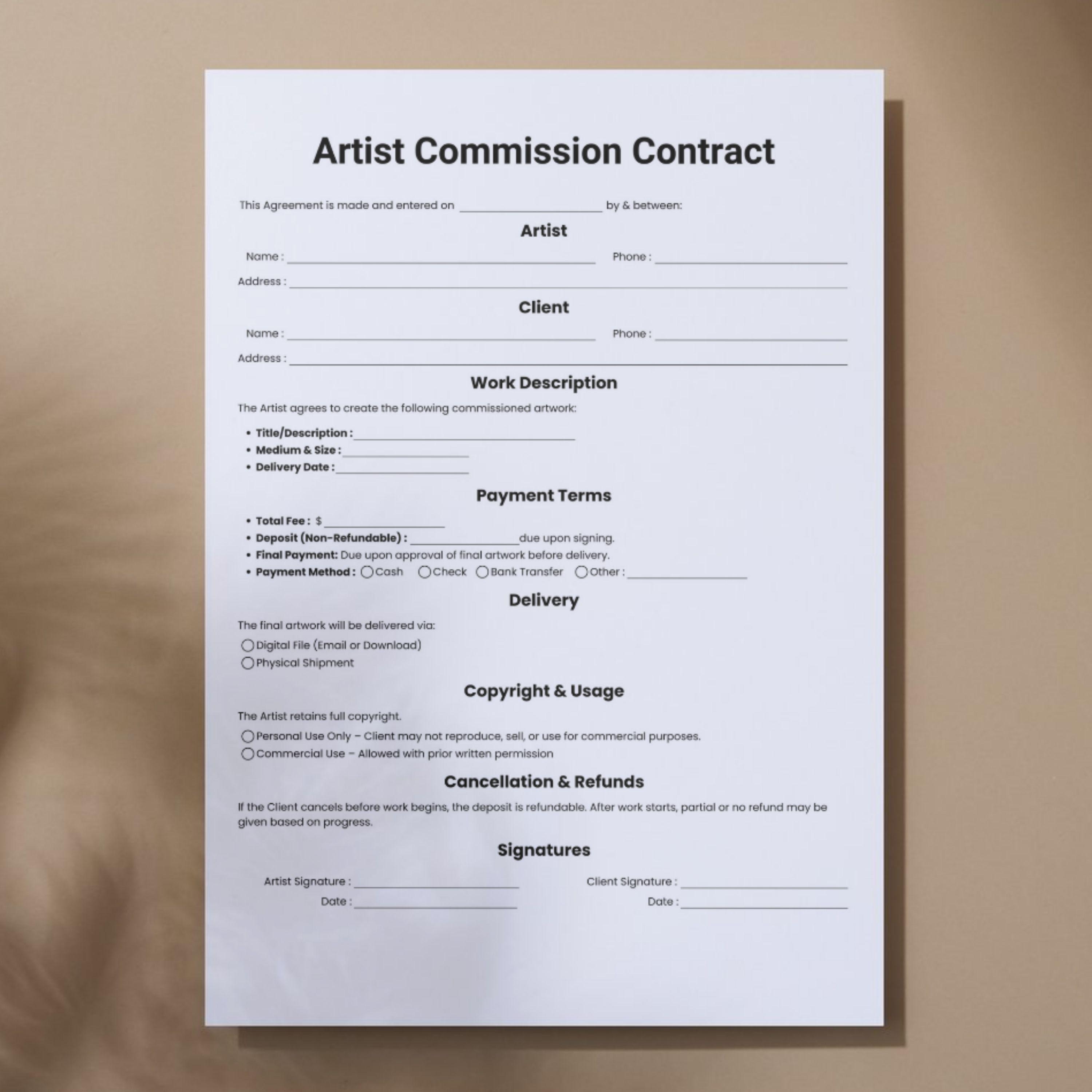
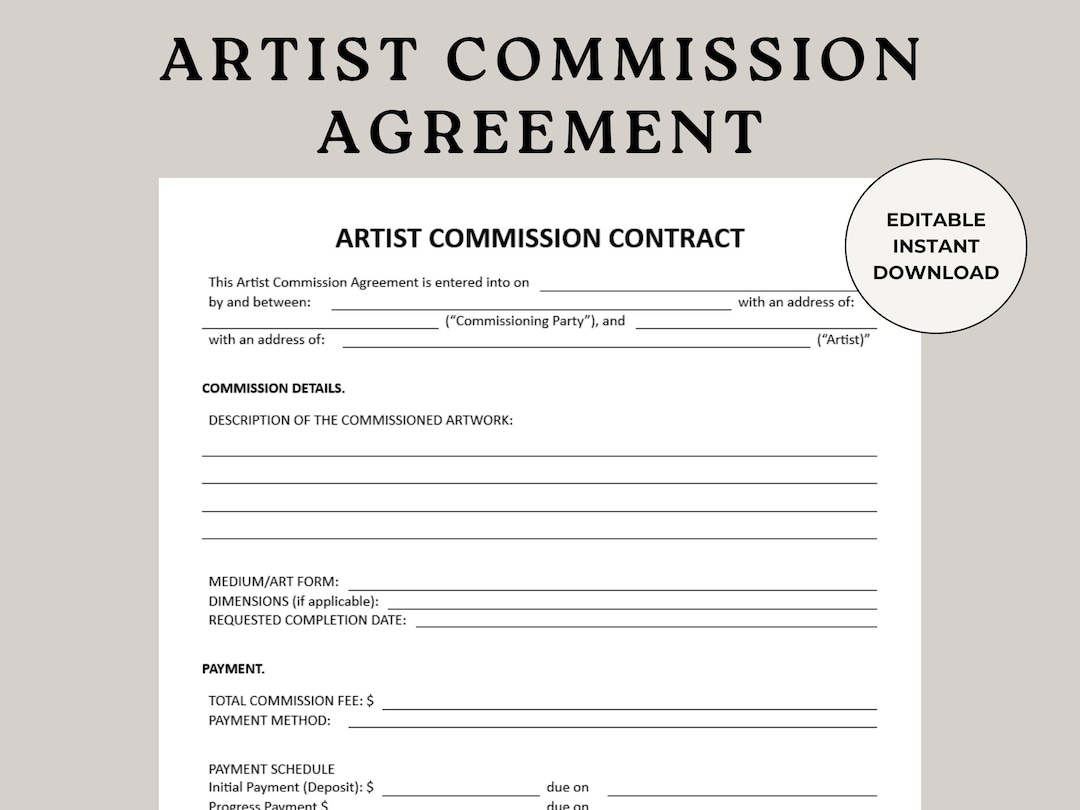
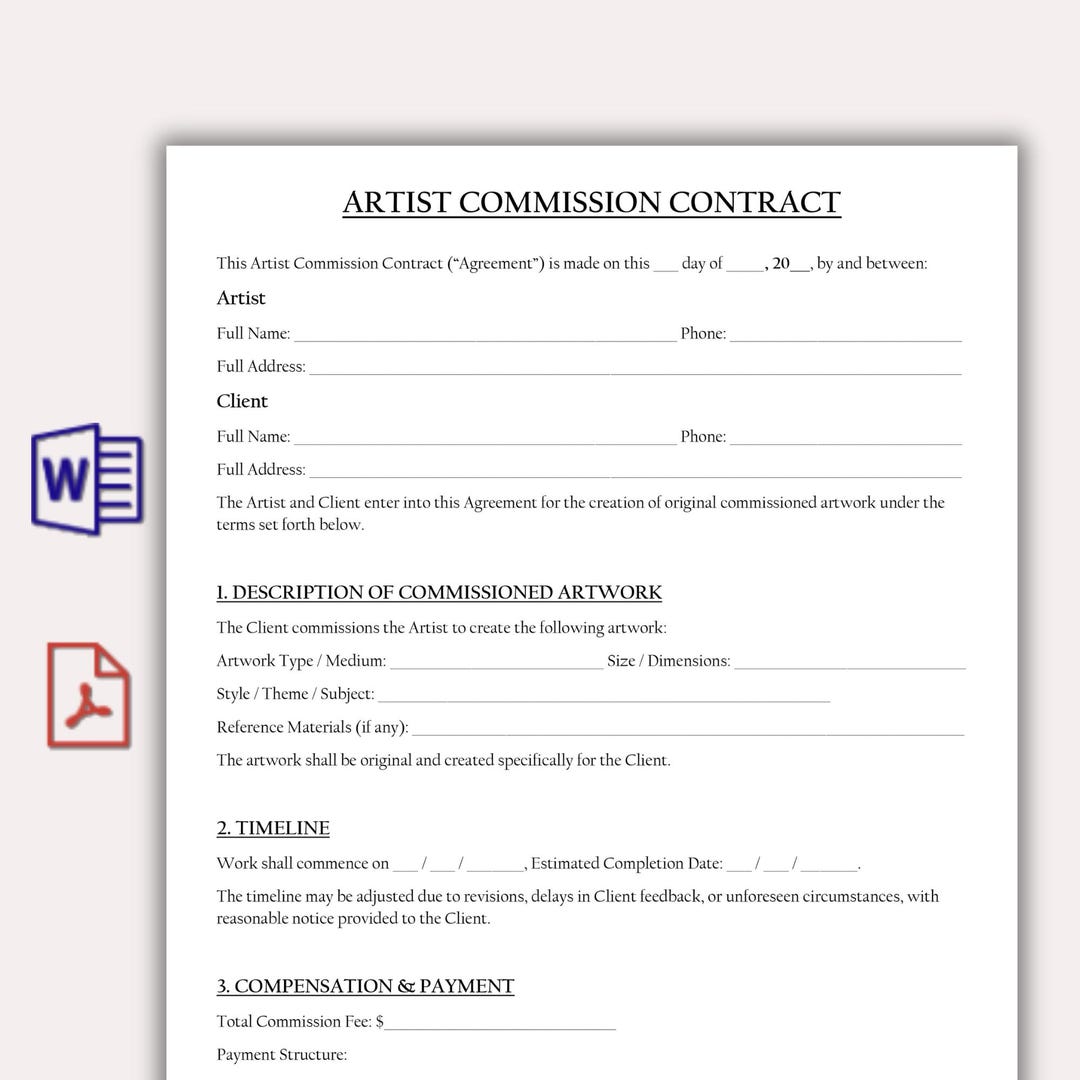
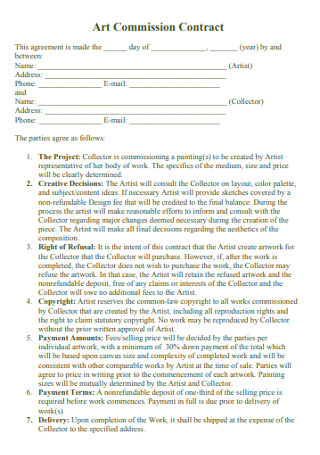
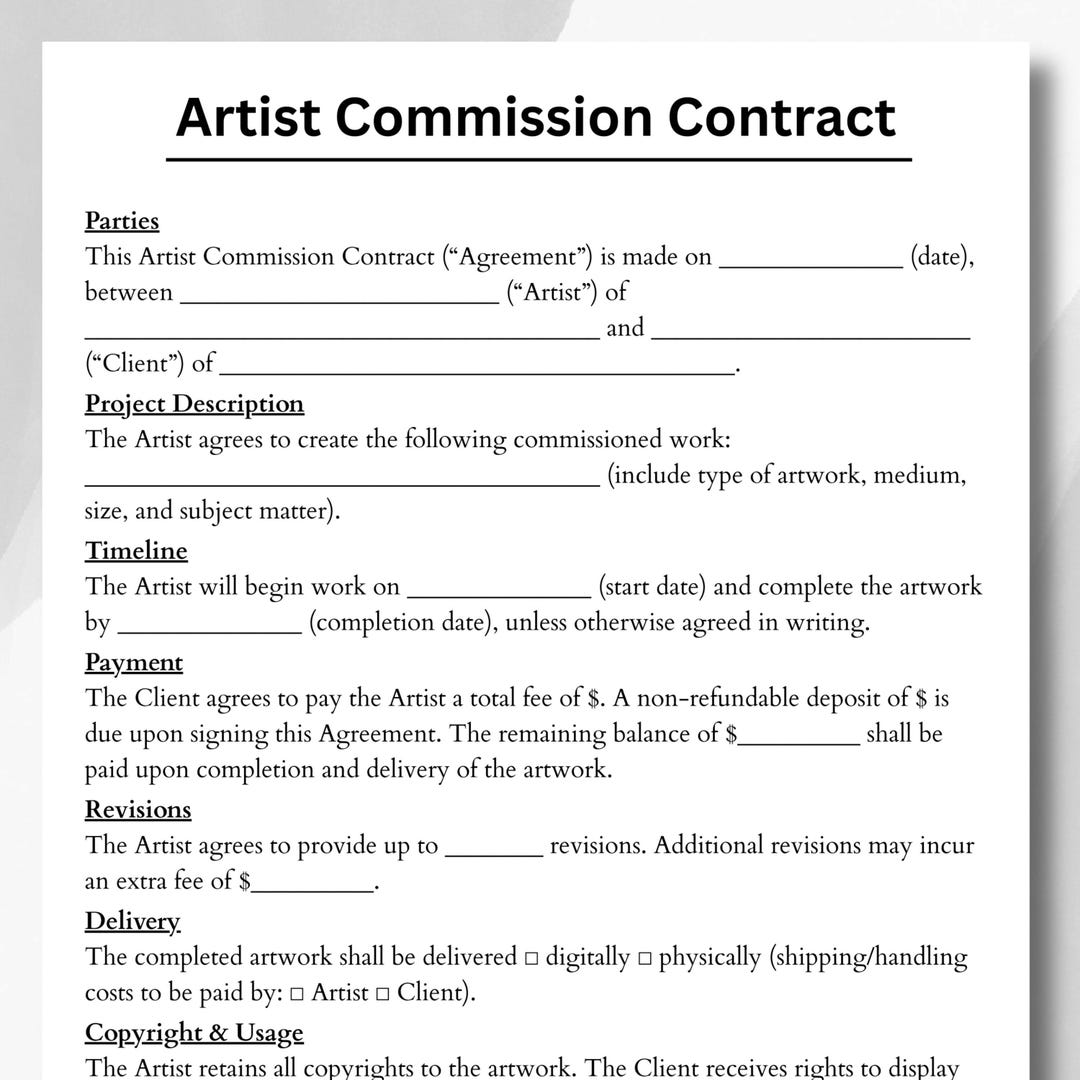
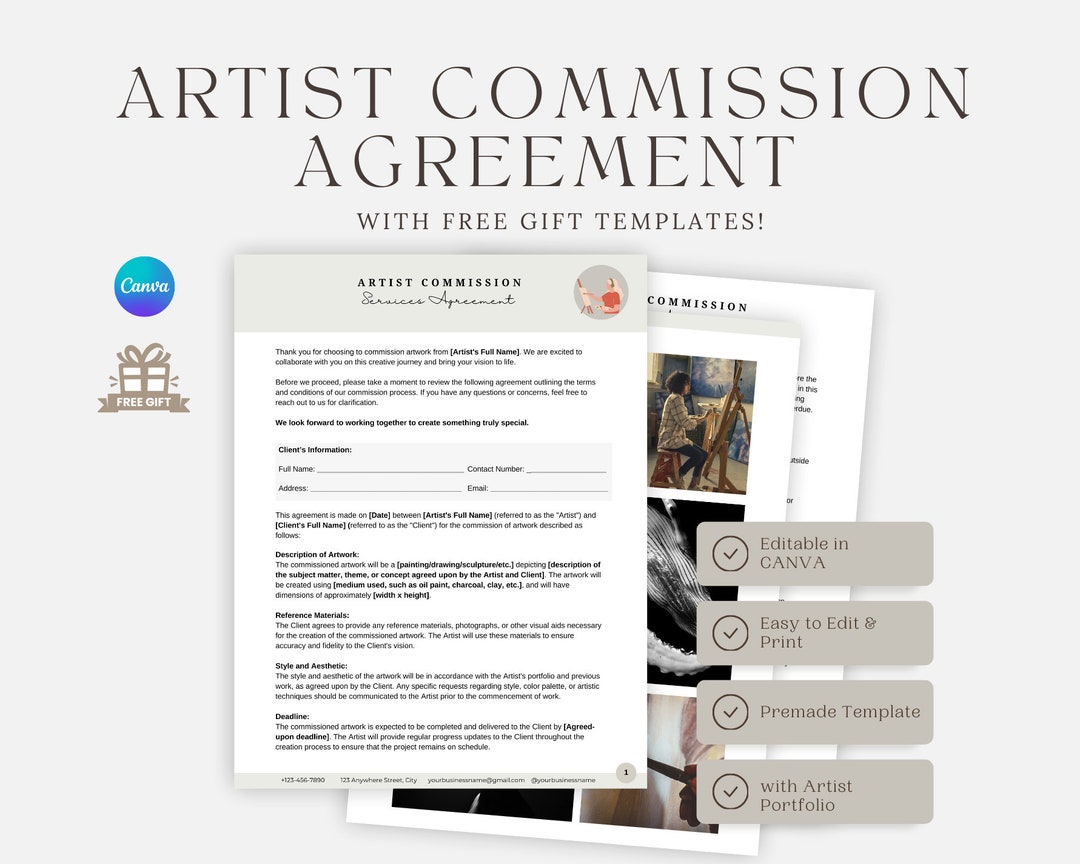
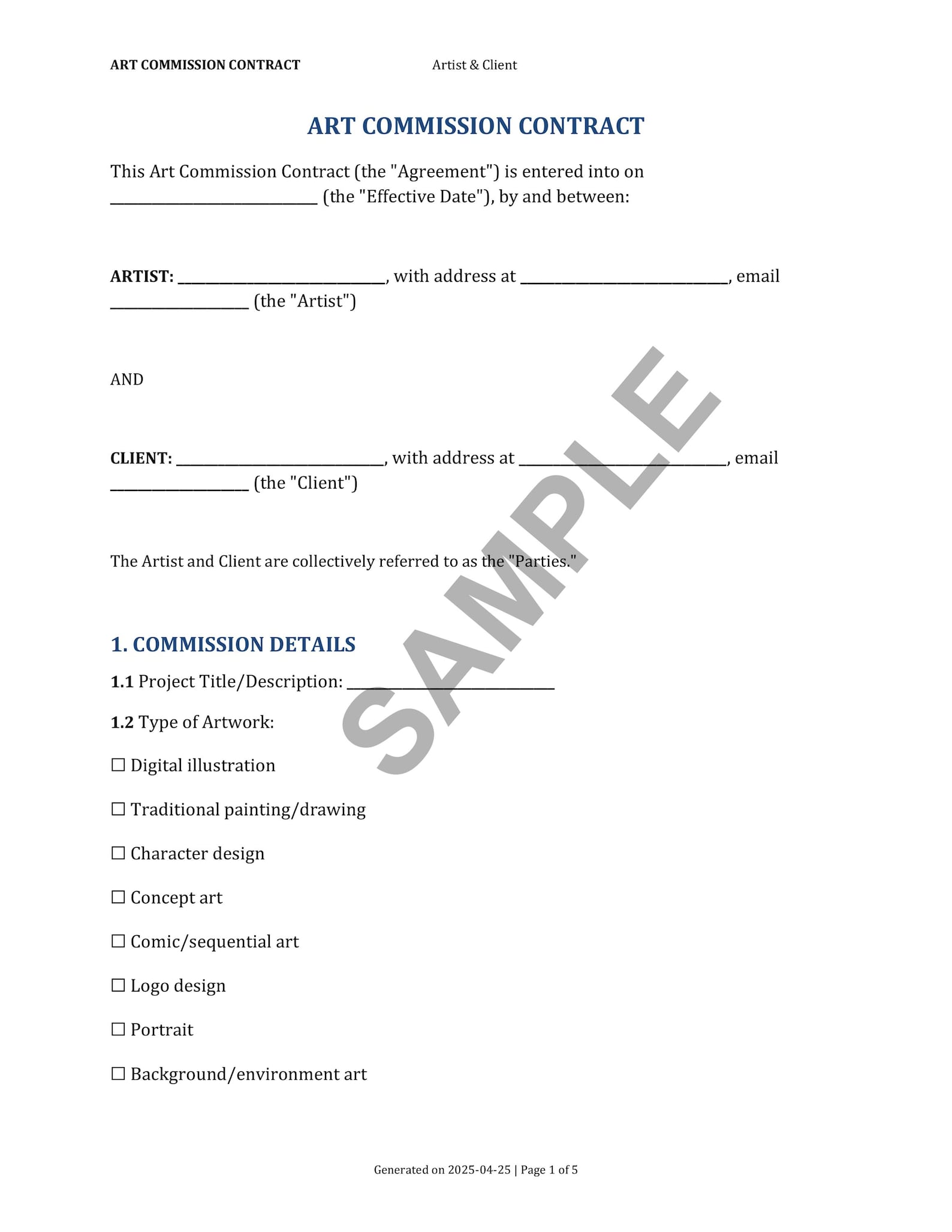
Art commission contracts are written agreements between an artist and a client. They explain what artwork the artist will make, how much the client will pay, when the work is due, who owns the copyright, and what happens if either side changes or cancels the project.
In the United States, artists often work with private clients, small businesses, publishers, galleries, and online buyers. A commission may involve a family portrait, a mural, a book illustration, a custom logo, or a digital painting. Each project can bring different costs and legal concerns. A written agreement helps both sides understand their duties before the artist starts work.
A clear contract does more than record a price. It sets the scope of the artwork, the number of revisions, the payment schedule, delivery terms, and the rights that the client receives. It also helps prevent disputes about source files, public display, commercial use, refunds, and missed deadlines. US copyright law can give the artist rights even after the client pays for the artwork, so ownership and usage terms need special care.
Source: etsy.com
What Are Art Commission Contracts?
An art commission contract is an agreement for creating custom artwork. The artist agrees to make a defined piece of work. The client agrees to pay under stated terms. Both sides accept the rules for the project.
The agreement may be a short document for a simple portrait or a longer contract for a public mural. The right level of detail depends on the work, price, risks, and intended use. A logo for a national brand needs more careful rights terms than a small personal sketch.
A contract can help show what both sides agreed to if a dispute occurs. It does not remove every risk. It also cannot make an illegal term valid or replace advice from a lawyer when a project has complex rights or high financial value.
Source: wonder.legal
Artist
The person or business that creates the commissioned work and agrees to meet the listed project duties.
Client
The person or business that orders the work and agrees to pay and provide the details needed to complete it.
Commissioned artwork
A custom creative work made for a client under an agreed brief, such as a painting, drawing, sculpture, illustration, or digital image.
Contract terms
The rules that cover the work, money, rights, timing, changes, delivery, and ways to end the agreement.
When Should an Artist Use a Contract?
Use a written agreement whenever a project has a payment, deadline, special request, or use of creative rights. Even a small job can lead to a dispute if the client expects more work than the artist priced.
A contract is useful for both new and skilled artists. It gives the client a clear view of the process. It also gives the artist a fair way to manage time, costs, and requests.
Personal commissions
Use a simple agreement for portraits, gifts, pet art, and custom home decor.
Business projects
Use detailed terms for logos, packaging, advertising, book art, and other work that may earn money for the client.
Public art
Set rules for site access, permits, safety, weather, public display, upkeep, and damage.
Is a Verbal Art Commission Agreement Valid?
Some oral agreements can form valid contracts under US law. But proving the exact terms can be hard when people remember the deal in different ways. A written contract gives both sides a shared record.
Some copyright transfers and certain agreements must meet specific written-signature rules. A message thread may help prove what the parties discussed, but it should not be treated as a safe substitute for a clear signed agreement.
Keep a written record
Save the brief, price, schedule, rights terms, approvals, and any later changes.
Use clear acceptance
Ask both sides to sign or clearly accept the final version before work begins.
What Should an Art Commission Contract Include?
A useful contract answers the main questions before work starts. It should identify the parties, describe the artwork, set the fee, explain the schedule, and state who may use the finished work.
Avoid vague phrases such as good quality, reasonable changes, or delivery soon. These words can mean different things to different people. Use clear details that both sides can check.
The agreement should also explain how the parties will handle new requests. A client may ask for a larger size, a new subject, or extra versions. The artist should know whether that work is part of the original fee or needs a new price.
Source: etsy.com
Names and contact details
List the legal names of the artist and client. Include business names, email addresses, and mailing addresses when needed.
Project description
Describe the subject, style, medium, size, format, number of pieces, and key details in the approved brief.
Fee and payment plan
State the total price, deposit, balance, payment dates, accepted methods, and any extra costs.
Schedule
Set the planned start date, review dates, client response times, and expected delivery date.
Revisions
Set the number and type of changes included in the fee. Explain the cost of extra revisions.
Copyright and usage
Explain who owns copyright and what uses the client may make of the artwork.
Delivery and files
State whether the client receives a physical piece, a print, a digital file, or editable source files.
Cancellation and disputes
Explain how either side may end the project and how the parties will address a disagreement.
Describe the Artwork in Measurable Terms
The project description should make the expected result easy to understand. Include the number of subjects, size, medium, color plan, background, and delivery format when those details matter.
For digital work, name the file type and size if the client needs a certain format. For a painting, state the material, dimensions, framing status, and whether shipping is included. Attach a sketch or approved brief when words alone may not explain the request.
Example
One 16-by-20-inch acrylic portrait of one person, based on client-supplied photos, with a plain background and an unframed canvas.
Reference images
List the approved reference files and explain whether the client confirms that they may be used.
Excluded work
State whether framing, printing, shipping, installation, animation, or editable files are outside the agreed scope.
Set a Clear Approval Process
A project often has more than one stage. The artist may send a rough sketch, a color draft, and a final preview. The contract should say what the client must approve at each stage.
Set a response period for feedback. If the client does not reply, the schedule may need to move. State how the artist will contact the client and what happens if approval is delayed.
Stage approval
Ask the client to approve the sketch before the artist begins detailed work.
Written feedback
Ask for one clear list of changes instead of many separate messages.
Final approval
Record approval of the final preview before shipping or sending the final file.
How Copyright Works for Commissioned Art in the United States
Copyright is one of the most important parts of an art commission contract. Under US law, copyright usually starts with the author of an original work once it is fixed in a form that people can see or copy. Paying an artist does not, by itself, give the client full copyright ownership.
The artist may own the copyright while the client owns the physical painting or sculpture. These are separate forms of ownership. A client may own the canvas but still need permission to make prints, sell copies, use the image in ads, or place it on products.
The contract should state whether the client receives a license or a transfer of copyright. A license gives permission for listed uses. A transfer gives away some or all ownership rights. These choices can affect the artist’s future income and the client’s ability to use the work.
Source: etsy.com
Copyright ownership
The legal rights in the creative work, which are separate from ownership of the physical object.
License
Permission to use the work under stated limits, such as a set purpose, region, time, or media.
Copyright assignment
A written transfer of copyright ownership, subject to the rules that apply under US law.
Exclusive license
A license that gives the client exclusive rights within the scope stated in the agreement.
Does the Client Own the Copyright After Paying?
No, not by default. The artist generally keeps copyright unless a valid legal rule or agreement changes that result. The client may own the physical artwork without owning the right to copy or publish it.
The agreement should avoid broad claims such as all rights included unless the parties know what that means. List the allowed uses in plain terms. For example, a client may receive permission to display a portrait at home but not to sell prints.
Personal display
The client may display the original artwork in a home or office if the agreement allows it.
Online use
The contract should state whether the client may post the work on a website or social media account.
Commercial use
Use on products, ads, packaging, books, or merchandise should be addressed directly.
What Is a Work Made for Hire?
Work made for hire is a specific legal category under US copyright law. It does not apply to every custom artwork or every project that a client pays for. The law has defined conditions for employee work and certain commissioned works.
For a commissioned work to qualify under the special commissioned-work rule, it must fit one of the listed types of work and the parties must sign a written agreement stating that it is a work made for hire. A commissioned painting or portrait does not automatically qualify just because the client requests it.
The parties should not rely on the label alone. If the client needs full ownership, the contract should include a clear copyright assignment where suitable. A lawyer can help decide whether a work-made-for-hire clause or an assignment fits the project.
Defined categories
The law lists specific types of commissioned work that may qualify, such as certain contributions to collective works, parts of audiovisual works, translations, and supplementary works.
Written agreement
The required signed writing must state that the work is made for hire.
Do not assume
A custom painting, illustration, or logo is not automatically a work made for hire.
How to Write a Useful Art License
A license should say what the client can do with the artwork. It should also state what the client cannot do. The clearer the limits, the less room there is for later conflict.
For business work, the license may cover a specific product, campaign, platform, or time period. For personal art, it may allow private display and personal sharing but not resale or commercial reproduction.
Purpose
Name the allowed use, such as a book cover, website banner, or personal display.
Scope
State the media, territory, duration, and whether the license is exclusive or nonexclusive.
Changes
Say whether the client may crop, edit, recolor, animate, or combine the artwork with other content.
Credit
Explain whether the artist must be named and where the credit should appear.
Sublicensing
State whether the client may let a printer, publisher, agency, or partner use the work.
How to Set Fair Payment Terms
A contract should show the full price and when each payment is due. It should also state what the fee covers. This helps prevent a client from treating extra work as part of the first price.
Many artists ask for a deposit before work begins. The deposit can help cover early labor and materials. The contract should explain whether it is credited toward the total price and how it will be treated if the project ends early.
Avoid calling every deposit nonrefundable without checking the law that applies to the deal. A fair cancellation clause should account for work already done, costs already paid, and any duties that local law may impose.
Source: etsy.com
Total fee
State the full amount and the currency. List any sales tax, shipping, framing, or other costs separately when relevant.
Deposit
State the amount due before work begins and how it will be applied to the final price.
Milestone payments
Set payment dates for clear stages, such as approval of the sketch or completion of the first draft.
Late payment
Explain when payment is late and what lawful steps may follow, such as pausing work.
Extra costs
Explain how the artist will get approval for added materials, travel, shipping, or rush work.
Example of a Commission Payment Plan
Consider a hypothetical portrait commission with a total fee of $800. The artist and client agree that $200 is due when the contract is signed, $300 is due after the sketch is approved, and the final $300 is due before the finished work is shipped.
This plan links payment to real stages. It also gives the artist funds to begin the work and a clear point to pause if a payment is missed. The figures are only an example; the right plan depends on the project and the parties’ agreement.
At signing
$200 deposit, credited toward the total fee.
After sketch approval
$300 milestone payment before detailed work continues.
Before delivery
$300 final payment before the artwork is shipped.
What If the Client Requests More Work?
Use a change process for work that falls outside the original brief. The artist should describe the added task, extra fee, and effect on the delivery date. The client should approve the change in writing before the artist does the extra work.
This process is often called a change order. It can be a short signed note or an email that clearly records the new scope and price, if the main contract allows written changes by email.
New subject
A request to add another person, pet, or major object may require a new fee.
New format
A request for extra sizes, print files, or animation may need a separate price.
Rush work
A shorter deadline may affect other work and should have a clear fee and schedule.
Deadlines, Revisions, Delivery, and Cancellation
A good agreement sets a realistic timeline and explains what may change it. The artist may need time to gather materials, make sketches, create the final piece, dry paint, or arrange shipping. The client may also need time to send references and approve drafts.
Do not promise a fixed delivery date if the client controls key steps. Instead, state what the artist needs and how delays affect the schedule. A clear process helps both sides plan without blaming each other for every change.
The contract should also explain how many revisions are included. A revision is a change to work already made. A new concept or a major change to an approved design may be extra work rather than a normal revision.
Source: sample.net
Start date
State when work begins, such as after signing, deposit payment, and receipt of all required references.
Client duties
List the photos, text, measurements, approvals, and other items the client must provide.
Revision limit
Set a clear number of included revision rounds and explain what counts as a round.
Delivery
State the method, format, shipping terms, and who pays delivery costs.
Cancellation
Set a fair method to work out payment, completed work, expenses, and delivery of any usable work.
How Many Revisions Should Be Included?
There is no single revision limit that fits every art project. A simple portrait may need one sketch review and one small final change. A complex illustration may need several review stages.
Define the stage and size of each change. For example, changing a small color detail may be a minor revision. Replacing the subject after the final sketch is approved may require a new fee and more time.
Minor revision
A small change that does not alter the main layout or approved concept.
Major revision
A change that affects the subject, composition, style, or much of the completed work.
New project
A request that changes the agreed work so much that a new brief and price are needed.
What Should a Cancellation Clause Say?
A cancellation clause should explain how either side can end the project and what happens next. It should not use unclear language that lets one party keep all money without regard to the work done or costs paid.
One approach is to set payment by completed milestones. Another is to state that the client must pay for work completed up to the cancellation date and approved costs that cannot be recovered. The contract should also say whether the client receives sketches or partial work and what rights apply to them.
A lawyer should review cancellation terms for high-value work, consumer projects, and agreements that may be subject to state or local rules. Some transactions have special laws that affect refunds or cancellation rights.
Client cancels
Explain how the artist will calculate payment for completed work and approved costs.
Artist cannot finish
Explain how the artist will notify the client, return any amount due, and transfer any agreed partial work.
No response
Set a process for reminders and a pause or end date if the client does not provide needed feedback.
Protect Physical Artwork During Delivery
For physical work, state who packs the artwork, who pays for shipping, and when risk of loss passes to the client. Include the delivery address and any insurance or signature needs.
For digital work, state when the artist sends the final files and whether editable files are included. A flat image file does not mean the client receives the artist’s working layers, sketches, or source files.
Packing
Set responsibility for safe packing and any special handling.
Shipping
State the carrier, cost, tracking, insurance, and delivery address where known.
Digital files
Name the file types, resolution, transfer method, and source files included.
How to Create and Sign an Art Commission Contract
You do not need a complex legal document for every small commission. You do need terms that match the work and that both sides understand. Start with a clear brief, then build the agreement around the real risks of the project.
A template can help you start, but it should not be copied without review. A form made for a digital portrait may not cover a mural, commercial illustration, sculpture, or work that uses a client’s brand assets. Change the terms to fit the actual deal.
Both sides should receive the same final version. Save the signed copy and the supporting brief in a safe place. Keep later approvals and changes with the project record.
Source: etsy.com
Step 1: Define the project
Write the brief, list the deliverables, and agree on what is outside the scope.
Step 2: Set the price
Calculate labor, materials, overhead, shipping, taxes where applicable, and any license fee.
Step 3: Choose the rights
Decide whether the client needs personal use, business use, an exclusive license, or a copyright transfer.
Explain delays, cancellation, damage, dispute handling, and any project-specific safety duties.
Step 6: Review and sign
Check names, dates, amounts, attachments, and rights language before both sides sign.
Step 7: Keep records
Save the agreement, payment proof, approved drafts, change orders, and delivery confirmation.
Can You Sign an Art Contract Online?
In many US transactions, electronic signatures can be valid. Federal law generally prevents a contract or signature from being denied legal effect only because it is electronic. State law may also apply, and some document types have special rules.
Use a method that shows who signed, what version they accepted, and when they accepted it. Keep a copy that both parties can access. For a major copyright transfer or complex deal, ask a lawyer to confirm the form and signing process.
Use a final version
Do not let each party sign a different draft with different terms.
Keep proof
Save the signed document and any audit record supplied by the signing service.
Check legal limits
Confirm whether the deal or document has special signing rules.
How to Use a Free Contract Template
A free template can be a useful starting point. Read every clause and remove terms that do not fit the project. A template may use broad rights language or cancellation terms that are not right for your work.
Do not assume a template is legally sound just because it looks formal. Check whether it names the correct parties, describes the work, sets a clear price, and explains copyright in plain language. Have a US attorney review it when the project is valuable or the rights are broad.
Check the scope
Make sure the template describes the exact artwork and deliverables.
Check the law
Consider the state law and any consumer or industry rules that may apply.
Check rights
Replace unclear ownership terms with a specific license or transfer clause.
Common Contract Mistakes Artists and Clients Should Avoid
Most commission disputes start with a gap between what one person expects and what the other person agreed to do. A contract can close many of those gaps, but only if its terms are clear and realistic.
Do not rely on a payment receipt as the full agreement. A receipt may show that money changed hands, but it may not explain copyright, revisions, delivery, or cancellation. Keep the full agreement with the payment record.
Do not copy legal language that neither side understands. A short, clear clause is often more useful than a long clause with broad words and no clear result.
Source: etsy.com
No written scope
A vague brief can lead to extra subjects, new formats, and repeated changes without extra pay.
Unclear copyright
The client may expect commercial rights while the artist expects to keep them.
No revision limit
The client may ask for repeated changes that were not included in the original price.
Unclear deposit terms
A dispute may arise if neither side knows what happens to the deposit after cancellation.
Unrealistic deadlines
The artist may not have enough time if client approvals, materials, or shipping are delayed.
Missing delivery terms
The parties may disagree about shipping, insurance, file types, or source files.
No written change process
New requests may become disputed because the price and schedule were never approved.
Using Copyrighted Reference Images
A client may send a photo or image as a reference. That does not always mean the client owns the image or has permission to authorize every use. The artist should ask who made it and whether the client has the needed rights.
A contract can require the client to confirm that supplied material may be used for the project. But that promise does not make an unauthorized use lawful. Artists should avoid copying protected work in ways that may infringe another person’s rights.
Client-supplied photos
Ask the client to confirm that they took the photo or have permission for the intended use.
Brand assets
Check whether logos, fonts, and other supplied assets may be used in the artwork.
Third-party art
Do not assume that an image found online is free to copy or adapt.
When a Lawyer Should Review the Agreement
Get legal advice when a commission has high value, broad commercial use, a full copyright transfer, or several parties. A lawyer can also help with public art, murals, large installations, international clients, and projects with strict insurance or safety needs.
Seek help if the contract includes indemnity, liability limits, ownership of source files, rights in future work, or a dispute over authorship. These terms can have effects beyond the price of one artwork.
Large commercial deal
A business may need rights for many products, markets, and future campaigns.
Copyright transfer
A transfer can give away valuable rights and should be drafted with care.
Public installation
Site rules, permits, injury risks, maintenance, and removal may need detailed terms.
Cross-border project
Different countries may apply different rules to contracts, copyright, taxes, and dispute resolution.
A Practical Checklist Before You Start a Commission
Before work begins, both sides should be able to explain the deal in the same way. The artist should know what to make, how much to charge, and when to deliver. The client should know what they will receive and what rights they will have.
Read the agreement once from the artist’s view and once from the client’s view. If a term seems unclear to either side, rewrite it before signing. A few minutes of careful review can prevent a long dispute later.
Source: etsy.com
Project details
The artwork, size, medium, style, subject, and final format are clear.
Price
The fee, deposit, milestone payments, expenses, and due dates are listed.
Time
The start date, approval dates, client duties, and expected delivery date are stated.
Changes
The number of revisions and cost of extra work are clear.
Rights
Copyright ownership, license scope, credit, and commercial use are defined.
Delivery
Shipping, insurance, file types, source files, and final payment are covered.
Ending the deal
Cancellation, refunds, completed work, and dispute steps are addressed.
Records
Both sides will keep the signed agreement, approvals, receipts, and final delivery proof.
A Simple Example of a Commission Agreement
A client hires an artist to create a digital portrait for personal use. The agreement lists one subject, a square digital image, two sketch options, one round of minor changes, and delivery as a high-resolution PNG file. The total fee is $500, with half due at signing and half due before the final file is sent.
The artist keeps copyright. The client receives a nonexclusive license to print one copy for personal display and share the image on personal social media with credit. The client may not sell prints, use the image in ads, or place it on merchandise without a new written license.
The agreement also sets a response time for feedback and says that major changes after sketch approval need a new fee. This example is a planning aid, not a complete legal form. The final terms should fit the real project and applicable law.
What the artist makes
One digital portrait with the agreed subject and format.
What the client pays
$250 at signing and $250 before final delivery.
What the client receives
The final PNG file and a limited personal-use license.
What needs new permission
Commercial use, merchandise, resale, or extra versions.
Frequently Asked Questions
Q
Are art commission contracts legally binding?
They can be legally binding when the parties form a valid agreement under the law that applies. The contract should show who is involved, what each side promises, and the agreed payment and other key terms. A signed written document is easier to prove than a vague oral discussion.
Q
Can an artist keep copyright after selling commissioned artwork?
Yes. In the United States, the artist generally keeps copyright unless it is validly transferred or another legal rule applies. The client may own the physical artwork but still need a license to reproduce, publish, or sell copies.
Q
Should artists ask for a deposit before starting?
A deposit can help cover early labor and materials. The contract should state the amount, due date, and how it will be handled if the project is canceled. The artist should not assume that calling a deposit nonrefundable makes it lawful in every case.
Q
Can a client cancel an art commission after paying?
The answer depends on the contract and applicable law. The agreement should explain payment for completed work, approved costs, and any refund due. Both sides should follow the written cancellation process and keep records of the work completed.
Q
Do artists need a lawyer to write a commission contract?
Not every small commission needs a lawyer. A clear template may work as a starting point for a simple project. Legal review is wise for high-value commissions, broad commercial licenses, copyright transfers, public installations, and agreements with complex risk or liability terms.
✦ Wrapping Up
Conclusion
Art commission contracts help artists and clients start a project with the same plan. They set the work, fee, timeline, revision process, delivery rules, and steps for ending the deal. Clear terms can prevent many disputes before they begin.
Copyright deserves special care in the United States. Buying a painting or paying for a digital commission does not automatically give the client every copyright right. A clear license or written transfer can show what the client may do and what the artist keeps.
The best agreement is one that fits the project. Keep the wording simple, define each duty, and record changes in writing. For large deals or complex rights, ask a qualified US attorney to review the terms before signing.
💡 Key Takeaway
Before accepting your next commission, write a clear project brief, set the payment and revision rules, choose the correct copyright terms, and have both parties sign the same agreement before work begins.