
Charcoal is softer and darker; graphite is smoother, cleaner, and better for precise drawing.
Charcoal vs graphite is one of those art choices that looks simple at first, but it shapes the whole drawing experience. If you have ever switched between the two, you know the difference is not just about color. It is about control, texture, mood, cleanup, and the kind of mark you want to leave on the page. In this guide, I will break down charcoal vs graphite in a clear, practical way so you can choose the right medium with confidence.
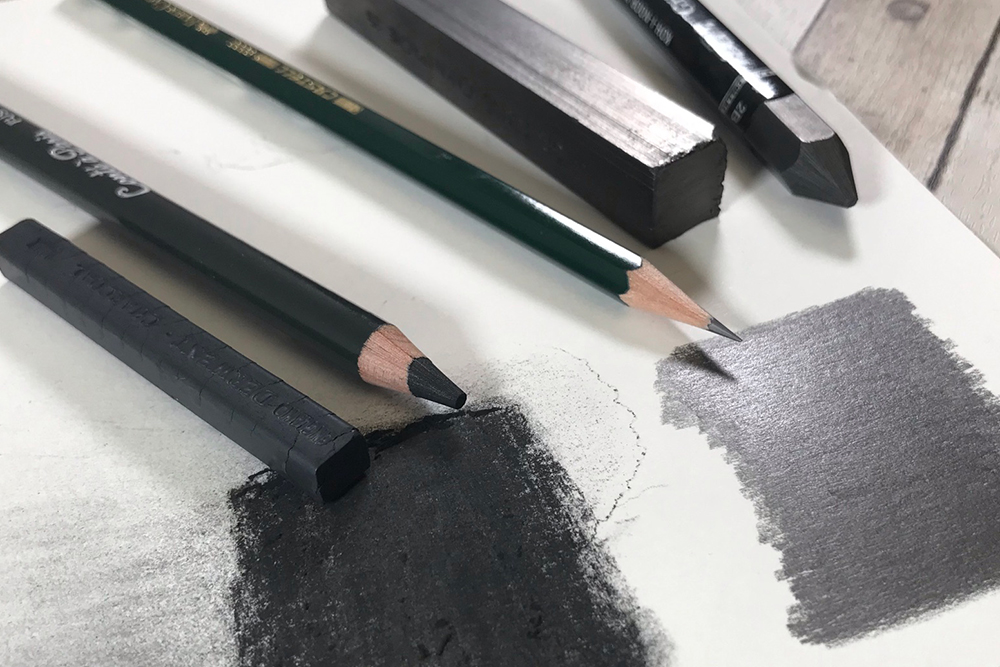
What Is Charcoal?
Charcoal is a drawing material made by heating wood or other organic matter in low oxygen. That process leaves behind a soft carbon stick that makes rich, dark marks. Artists use it for expressive sketches, bold shading, and dramatic contrast.
There are a few common types of charcoal:
- Vine charcoal: very soft, light, and easy to erase
- Compressed charcoal: darker, denser, and harder to control
- Charcoal pencils: cleaner to use and great for detail
From experience, charcoal feels a little like painting with smoke. It is loose, fast, and forgiving in some ways, but it can also get messy fast if you are not careful.
What Is Graphite?
Graphite is the material inside regular pencils. It is made from carbon and clay, which gives it a smoother, more controlled feel than charcoal. Most people meet graphite first in school, but it is also a serious fine art medium.
Graphite comes in a wide range of grades:
- Hard grades like 2H and 4H: light lines and fine detail
- Middle grades like HB and 2B: everyday drawing and sketching
- Soft grades like 6B and 8B: darker marks and smoother shading
Graphite is often the better choice when you want cleaner lines, tighter detail, or a more polished finish. It is less dramatic than charcoal, but it gives you precision.

Charcoal vs Graphite: The Main Differences
The biggest difference in charcoal vs graphite is how each material behaves on paper. Charcoal is softer, darker, and more velvety. Graphite is shinier, smoother, and more controlled.
Here is a simple side-by-side view:
- Charcoal makes deeper black tones
- Graphite usually looks gray to silvery
- Charcoal smudges easily
- Graphite smudges too, but usually less
- Charcoal erases more freely in some forms
- Graphite is easier to blend with fine control
- Charcoal gives a matte, organic look
- Graphite can create a reflective shine on the page
If you have ever tried to shade a portrait, you probably noticed this right away. Charcoal can make skin shadows feel soft and alive. Graphite can make edges crisp and details sharp, like eyelashes, hair strands, or metallic objects.
How Charcoal and Graphite Feel on Paper
Paper choice matters a lot in charcoal vs graphite. Charcoal grabs onto paper texture quickly, especially on rough or toothy paper. That makes it great for expressive strokes, but it also means mistakes can sink in fast.
Graphite glides more easily, especially on smooth paper. It lets you layer and refine slowly. I have found that beginners often feel more comfortable with graphite at first because it seems more predictable.
A few practical notes:
- Charcoal works best on textured paper
- Graphite works well on smooth or medium-texture paper
- Charcoal can break or crumble if handled carelessly
- Graphite pencils stay cleaner and are easier to carry
If you are doing a quick sketch outdoors, graphite is usually the less stressful option. If you want drama and rich shadows, charcoal wins the mood contest.
Charcoal vs Graphite for Drawing Style
Your drawing style should guide your choice.
Charcoal is great for:
- Life drawing
- Portraits with deep shadows
- Expressive sketches
- Abstract or gestural work
- Large-scale drawings
Graphite is great for:
- Technical drawing
- Realistic detail
- Fine line work
- Cross-hatching
- Clean studies and drafts
In my own practice, I learned the hard way that charcoal can overwhelm a page if you want tiny detail too early. Graphite, on the other hand, can feel too neat if you want a wild, emotional sketch. Each one has its own voice.
Charcoal vs Graphite for Beginners
If you are new to drawing, graphite is usually easier to start with. It is familiar, affordable, and simple to erase. You can learn line control, shading, and pressure without fighting constant smudges.
Charcoal is still beginner-friendly, but it teaches different lessons:
- Use light pressure first
- Expect more cleanup
- Fixative may be needed
- Smudging is part of the process
A beginner mistake I see often is pressing too hard with charcoal. That can flatten the drawing and make corrections harder. With graphite, the common mistake is overworking the surface until it looks shiny and tired.
Benefits of Charcoal
Charcoal has a lot going for it if you want emotion and depth.
Main benefits include:
- Deep black values
- Fast coverage for large areas
- Soft blending for shadows
- Great contrast for dramatic art
- Easy expressive mark-making
Charcoal is especially useful for artists who like bold visual impact. In art education and figure drawing, it has long been valued for quick studies because it helps you work from big shapes before details.
Limitations of Charcoal
Charcoal is not perfect, and that is worth knowing.
Its main drawbacks are:
- It smudges easily
- It can be messy on hands and paper
- It needs fixative for protection
- Fine details can be harder to keep crisp
If you are doing work that must stay clean, charcoal can be frustrating. I once ruined a nearly finished sketch by resting my palm on the page too soon. Since then, I always keep a scrap sheet under my hand when I work with charcoal.
Benefits of Graphite
Graphite is popular for a reason. It is stable, versatile, and easy to control.
Main benefits include:
- Excellent detail work
- Smooth shading
- Wide range of tones
- Clean handling
- Easy portability
Graphite is also a smart choice for studies, drafts, and finished drawings that need a neat look. It is the medium many artists reach for when they want precision without much fuss.
Limitations of Graphite
Graphite has its own limits too.
Common drawbacks include:
- Less deep black than charcoal
- Can develop shine in dark layers
- Harder to get a matte finish
- Sometimes looks too polished for expressive work
That shine is a big one. On some papers, heavy graphite can reflect light and make dark areas look uneven. If you want rich black shadows, charcoal usually handles that better.
Charcoal vs Graphite for Portraits
Portrait artists often compare charcoal vs graphite because both can create realistic faces. The difference lies in mood.
Charcoal gives portraits softness and drama. It is excellent for shadow shapes, contours, and emotional tone. Graphite is better for crisp eyes, hair detail, and smooth transitions in subtle skin tones.
A practical way to think about it:
- Use charcoal for the first loose block-in
- Use graphite for refined detail
- Combine both if you want depth and precision
Many professional artists mix them, which makes sense. Charcoal sets the atmosphere, and graphite sharpens the focus.
Can You Mix Charcoal and Graphite?
Yes, and in many cases, you should.
Mixing charcoal and graphite can give you the best of both worlds. Charcoal can create bold underlayers, while graphite can add structure and fine details on top. This is common in portrait work, tonal studies, and mixed-media drawing.
A simple workflow looks like this:
- Sketch the basic form in graphite or vine charcoal
- Build dark shadows with charcoal
- Refine edges and details with graphite
- Use a fixative if needed to protect the drawing
I have found this approach especially helpful when I want a drawing to feel alive but still polished. Just be aware that graphite on top of charcoal behaves differently depending on the paper.
Which Lasts Longer: Charcoal vs Graphite?
Graphite generally holds up better without smearing as much during handling, though it can still mark nearby pages if not protected. Charcoal is more fragile and often needs fixative or framing under glass.
If you care about preservation, here are the basics:
- Store drawings flat
- Use protective sheets between pages
- Apply fixative to charcoal work
- Frame finished pieces with glass when possible
Museums and drawing conservation practices often treat both materials as delicate, but charcoal needs more caution because loose particles can shift more easily.

How to Choose Between Charcoal and Graphite
The right choice depends on your goal.
Choose charcoal if you want:
- Bold contrast
- Soft edges
- Fast shading
- Dramatic mood
- A more expressive style
Choose graphite if you want:
- Clean lines
- Fine detail
- Better control
- Easier cleanup
- A more polished finish
If you are still unsure, start with graphite for practice and switch to charcoal when you want to push contrast and emotion. That is usually the easiest path for most beginners.
Charcoal vs Graphite in Real Life Use
In real studio work, the choice often comes down to speed and intent. If I am doing a quick gesture drawing, charcoal feels natural because it lets me move fast and think in shapes. If I am working on a detailed object study or a careful face, graphite gives me more control.
Here are a few real-world examples:
- Sketching a tree in a park: charcoal for broad texture, graphite for branches
- Drawing a still life: graphite for glass and metal, charcoal for deep shadows
- Making a moody portrait: charcoal for the background and graphite for facial details
The biggest lesson I have learned is simple: the “best” medium is the one that matches your purpose. That sounds obvious, but it saves a lot of frustration.
Frequently Asked Questions of charcoal vs graphite
Is charcoal darker than graphite?
Yes, charcoal is usually much darker and more matte than graphite. It creates deeper blacks and stronger contrast, which is why artists often use it for dramatic shading.
Is graphite easier to erase than charcoal?
Usually, yes. Graphite is easier to control and erase, especially in lighter grades, while charcoal can leave more residue depending on the type and paper.
Which is better for beginners, charcoal or graphite?
Graphite is usually better for beginners because it is cleaner and easier to manage. Charcoal is still beginner-friendly, but it takes more practice to control smudging and pressure.
Can you use charcoal and graphite on the same drawing?
Yes, many artists combine them. Charcoal is often used for bold shadows, while graphite adds fine detail and structure.
Which medium is better for realistic drawing?
Both can be used for realism, but graphite is often better for fine detail and charcoal is better for rich contrast. Many realistic artists use both together for the best result.
Conclusion
Charcoal vs graphite is not really about which one is better overall. It is about which one fits your style, your paper, and the feeling you want in the final drawing. Charcoal gives you depth, drama, and softness, while graphite gives you control, detail, and a cleaner finish.
If you are starting out, try both and pay attention to how they change your marks, your mood, and your workflow. The more you test them, the faster you will know which one feels right for your art. Try a side-by-side sketch today, and if this helped, keep exploring drawing tools that match the way you create.