
Drawing warm up exercises help your hand loosen up, sharpen control, and make sketching feel easier fast.
If you draw often, you already know the first few minutes can feel stiff. I’ve seen that many times in my own work, and the fix is usually simple: a short warm-up routine. In this guide, I’ll walk you through drawing warm up exercises that actually improve line confidence, coordination, and flow, so you can start every sketch with less tension and more control.

What drawing warm up exercises are
Drawing warm up exercises are short practice drills that prepare your hand, wrist, arm, and eye for drawing. They are like stretching before a run, but for artists. The point is not to make finished art. The point is to wake up your motor control and get your brain into “drawing mode.”
These exercises can include:
- Straight lines to improve accuracy
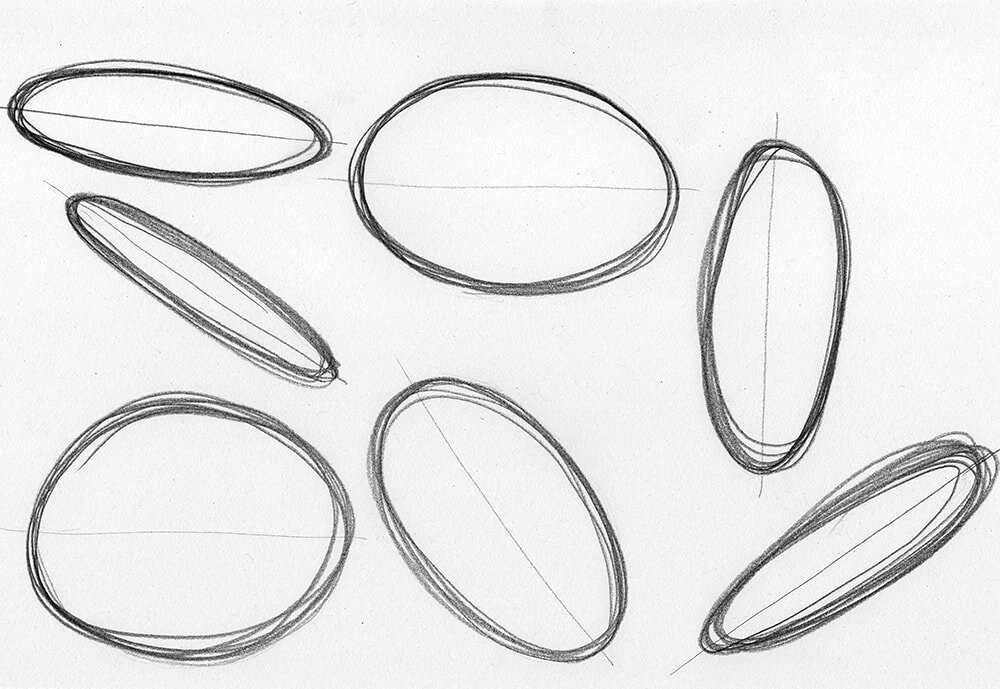
- Circles and ellipses to build smooth curves
- Swoops and arcs to loosen the wrist and shoulder
- Hatch marks to train control and rhythm
- Gesture sketches to improve speed and flow
In my experience, the best drawing warm up exercises are simple, fast, and repeatable. You do not need a fancy setup. A sketchbook, a pencil, and 5 to 15 minutes are enough.
The big benefit is that they lower the friction of starting. Once your hand feels ready, your first real drawing often looks cleaner and feels less forced.
Why drawing warm up exercises matter
Many artists skip warm ups because they want to save time. I used to do that too, especially when I thought I was “already warmed up” from drawing every day. The truth is that even experienced artists can feel rusty, tight, or shaky at the start of a session.
Drawing warm up exercises matter because they help with:
- Hand control: Your marks become steadier and more intentional
- Line confidence: You stop hesitating and start committing to strokes
- Muscle memory: Repeated motion helps your hand learn common shapes
- Observation: Quick drills train your eye to see angles, curves, and proportion
- Focus: A warm-up acts like a mental switch into creative work
There is also a practical side. Repetitive fine motor tasks can feel harder when you are tense or cold. A warm-up eases that transition. That is one reason many art teachers, illustrators, and animation teams use warm-up routines before serious work.
I have also noticed that warm-ups reduce the “fear of the blank page.” When you make a few messy lines on purpose, the page stops feeling precious. That alone can make a huge difference.
Benefits of drawing warm up exercises
Drawing warm up exercises offer more than just looser lines. They support both skill and mindset, which is why they are useful for beginners and professionals alike.
Better line quality
Smooth line practice helps your hand move in cleaner paths. Over time, this can reduce scratchy strokes and shaky edges. It is especially useful for ink drawing, comics, and technical sketching.
Stronger hand-eye coordination
When you repeat shapes and lines, your brain gets better at matching what you see with what your hand does. This is a core drawing skill. Even a few minutes a day can help.
Faster skill recovery after breaks
If you stop drawing for a while, warm-ups help you get back into shape. I have found that after a vacation or a busy week, a quick session of circles and line drills brings back rhythm much faster than jumping straight into a full illustration.
More relaxed drawing sessions
Warm-ups lower tension in the hand and shoulder. That can make drawing feel less tiring, especially during long sessions.
Better consistency over time
Small daily habits add up. Warm-up exercises help create a stable routine, which often leads to stronger progress than random practice.
Best drawing warm up exercises to try
There is no single perfect routine. The best drawing warm up exercises depend on your goals. Still, a balanced mix of straight lines, curves, shapes, and gesture work gives most artists a strong foundation.
Straight line drills
Draw rows of straight lines across the page. Try long lines, short lines, and diagonal lines. Focus on confidence, not perfection.
A helpful tip is to draw from the shoulder when making longer lines. That often creates smoother movement than trying to force everything from the wrist.
Circles and ellipses
Fill a page with circles of different sizes. Then draw ellipses, ovals, and tilted loops. These shapes train curve control and help with faces, objects, and perspective.
A mistake I made early on was drawing each circle too slowly. That usually made them wobblier. A cleaner result often comes from a more relaxed, fluid motion.
S curves and C curves
These simple motions loosen the wrist and arm. They are great for gesture drawing and organic forms like hair, vines, fabric, and waves.
Try drawing them in rows, then vary the size and direction. This helps your hand adapt to different motions.
Loops and spirals
Loops build flow and rhythm. Spirals help your hand move continuously without stopping too often. These are excellent for getting past stiffness.
Crosshatching and shading drills
Make small boxes and fill them with even hatch marks. Then try crosshatching at different angles. This improves pressure control and line spacing.
If your lines get too heavy, lighten your grip. I have found that many artists press harder than they need to when they feel unsure.
Gesture drawing
Use 30-second to 2-minute gesture sketches from simple references or memory. Focus on movement, posture, and flow rather than detail. This is one of the best drawing warm up exercises for figure work and concept art.
Gesture warm-ups train you to see the action behind the form. That habit carries into all kinds of drawing.
Shape repetition
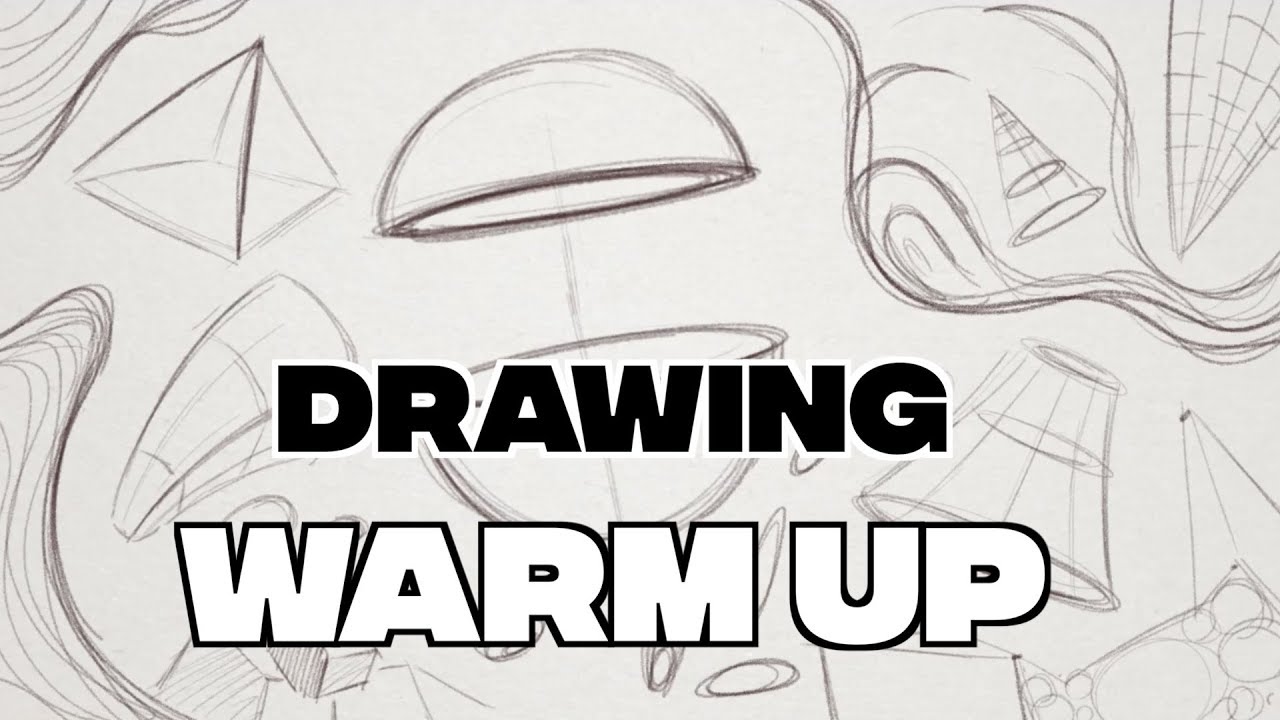
Draw cubes, cylinders, cones, and spheres from different angles. These basic forms build spatial thinking. They are especially useful if you plan to draw objects, characters, or environments.
How to build a drawing warm up routine
A good routine should feel easy enough that you will actually do it. If it takes too long, it becomes a chore. If it is too random, it may not help much.
A simple routine might look like this:
- Start with loose arm movements for 1 minute.
- Draw straight lines for 2 minutes.
- Draw circles and ellipses for 2 minutes.
- Draw curves and loops for 2 minutes.
- Finish with quick gesture sketches for 3 minutes.
You can adjust the time based on your needs. If you only have five minutes, that still helps. If you have more time, repeat the exercises with your non-dominant hand or try harder shapes.
A useful rule I like is this: warm up just enough to feel “awake,” not so much that you are tired before the real work starts.
Common mistakes to avoid
Even good drawing warm up exercises can miss the mark if the approach is off. I have made most of these mistakes myself at some point.
Making the warm-up too complicated
If your warm-up takes too long to explain, it is probably too much. Keep it simple.
Chasing perfection
Warm-ups are practice, not performance. The goal is to move, not to impress yourself. If every line has to be perfect, the exercise stops being useful.
Using only one type of drill
Only drawing circles, for example, leaves gaps in your practice. Try to mix lines, curves, forms, and gesture work.
Skipping warm-ups when tired
This is when you may need them most. A short warm-up can help you settle in, even on low-energy days.
Holding the pencil too tightly
A tight grip leads to stiff marks. Use enough pressure to control the tool, but keep your hand relaxed.
Drawing warm up exercises for beginners
If you are new to art, start with the basics. Beginners often think they need advanced drills, but simple ones are more useful at first.
A beginner-friendly warm-up can include:
- 10 straight lines
- 10 circles
- 10 ellipses
- 10 S curves
- 3 quick gesture sketches
Keep your attention on motion, not beauty. A page full of messy practice is still a useful page if it helps you improve.
I often tell new artists to treat warm-ups like tuning an instrument. You are not trying to play a song yet. You are just making sure the instrument works well.
Drawing warm up exercises for advanced artists
Advanced artists can still benefit from warm-ups, but the drills can be more targeted. If you already have strong basics, use warm-ups to focus on weak spots.
For example:
- Figure artists can do gesture sketches and simplified anatomy shapes
- Comic artists can practice expressive faces and dynamic poses
- Designers can draw boxes, cylinders, and perspective grids
- Ink artists can focus on line weight and clean contours
One trick I have used is to rotate the focus by week. One week might be for hands. Another might be for perspective. Another might be for movement. That keeps practice fresh and prevents boredom.
How long should drawing warm up exercises take
There is no single perfect time. Most artists do well with 5 to 15 minutes. That is enough to reduce stiffness without eating into the main drawing session.
If you are doing a quick sketch session, even 3 minutes can help. If you are about to work on a big illustration or client piece, 10 to 20 minutes may be better.
The best length is the one you can repeat often. Consistency matters more than duration.
When to use drawing warm up exercises
You do not need to warm up only once a day. Use them whenever your hand or focus needs a reset.
Good times to warm up include:
- Before starting a drawing session
- After a long break from art
- Before inking or clean line work
- Before figure drawing or gesture practice
- After a few hours of digital tablet work
- When your lines feel shaky or tense
I have also used warm-ups to break creative blocks. Sometimes the problem is not “lack of ideas.” It is just a cold start. A few easy drills can lower the resistance and get momentum going again.
Digital vs traditional drawing warm up exercises
The core idea is the same in both cases, but the tools feel different.
For traditional drawing:
- Use pencils, pens, markers, or charcoal
- Focus on paper texture and pressure control
- Practice hand movement across the page
For digital drawing:
- Use your tablet, stylus, and chosen app
- Practice line confidence on a blank canvas
- Adjust brush size, smoothing, and pen pressure settings
Digital artists may need a little extra time to adjust to tablet feel. I have found that line drills are especially useful on a new device or brush setup. They help you learn how the tool responds before you start the main piece.
Expert-backed ideas that support warm-up practice
Art education and motor learning both point to the value of repetition, controlled motion, and gradual skill building. In plain English, your hand and brain get better when they practice specific motions regularly.
That lines up with what many instructors teach in figure drawing, animation, and design programs. It also fits what artists notice in real life: the first marks are usually the roughest, and a few minutes of focused practice often smooths them out.
Still, warm-ups are not magic. They will not replace drawing time, studying form, or learning perspective. They work best as a support tool, not a shortcut.
Frequently Asked Questions
What are the best drawing warm up exercises for beginners?
The best drawing warm up exercises for beginners are straight lines, circles, ellipses, and simple curves. These drills build basic control without overwhelming you.
How often should I do drawing warm up exercises?
Do them before most drawing sessions if you can. Even 5 minutes a day can help build consistency and reduce stiffness.
Do drawing warm up exercises really improve skill?
Yes, they can improve control, confidence, and coordination over time. They work best when paired with regular drawing practice and study.
Can I skip warm up exercises if I draw every day?
You can, but it is still useful to warm up on days when your hand feels stiff or your focus feels off. Daily drawing does not always mean you are fully ready to make clean lines right away.
Are drawing warm up exercises useful for digital art?
Yes, they are very useful for digital art. They help you adjust to tablet feel, stylus pressure, and line control before starting a finished piece.
Conclusion
Drawing warm up exercises are one of the simplest habits you can build as an artist, but they can have a real impact on your line quality, confidence, and focus. They are quick, low-pressure, and easy to tailor to your style, whether you draw on paper or digitally.
If you want better control and a smoother start to every session, keep your warm-up short, repeat it often, and stay patient with your progress. Try a few routines this week and notice how your hand feels before and after. If this guide helped, save it, share it, or leave a comment with your favorite warm-up drill.