
Pattern in art is the repeated use of shapes, lines, colors, or motifs to create rhythm and meaning.
Pattern in art is one of those ideas that looks simple at first, then opens up in surprising ways. Once you know how artists use pattern, you start seeing it everywhere, from ancient mosaics to modern digital design. In this guide, I’ll walk you through what pattern in art really means, why it matters, and how artists use it to build beauty, structure, and emotion.

What pattern in art means
Pattern in art is the repeated arrangement of visual elements. Those elements can be shapes, lines, colors, textures, or symbols. When they repeat in a planned way, they create a pattern.
At its core, pattern in art helps the eye move through a work. It can make a piece feel calm, lively, formal, or chaotic. It can also give meaning, because many cultures use pattern to show identity, belief, and tradition.
Pattern in art is not the same as decoration alone. A pattern can be decorative, but it can also carry structure and message. That is why artists, designers, and craftspeople have used pattern for centuries.
Why pattern in art matters
Pattern in art matters because it gives order to a visual space. Without pattern, some works can feel scattered or hard to read. With pattern, the viewer gets a sense of flow.
Pattern also adds memory and recognition. Think about wallpaper, fabric, tile work, or textile design. These often use pattern in art to create a strong visual identity that people notice right away.
From my own work reviewing art and design projects, I’ve seen how pattern can change a piece fast. A plain composition may feel flat, but once repetition enters the image, the whole mood shifts. It is like music gaining a beat.
The main types of pattern in art
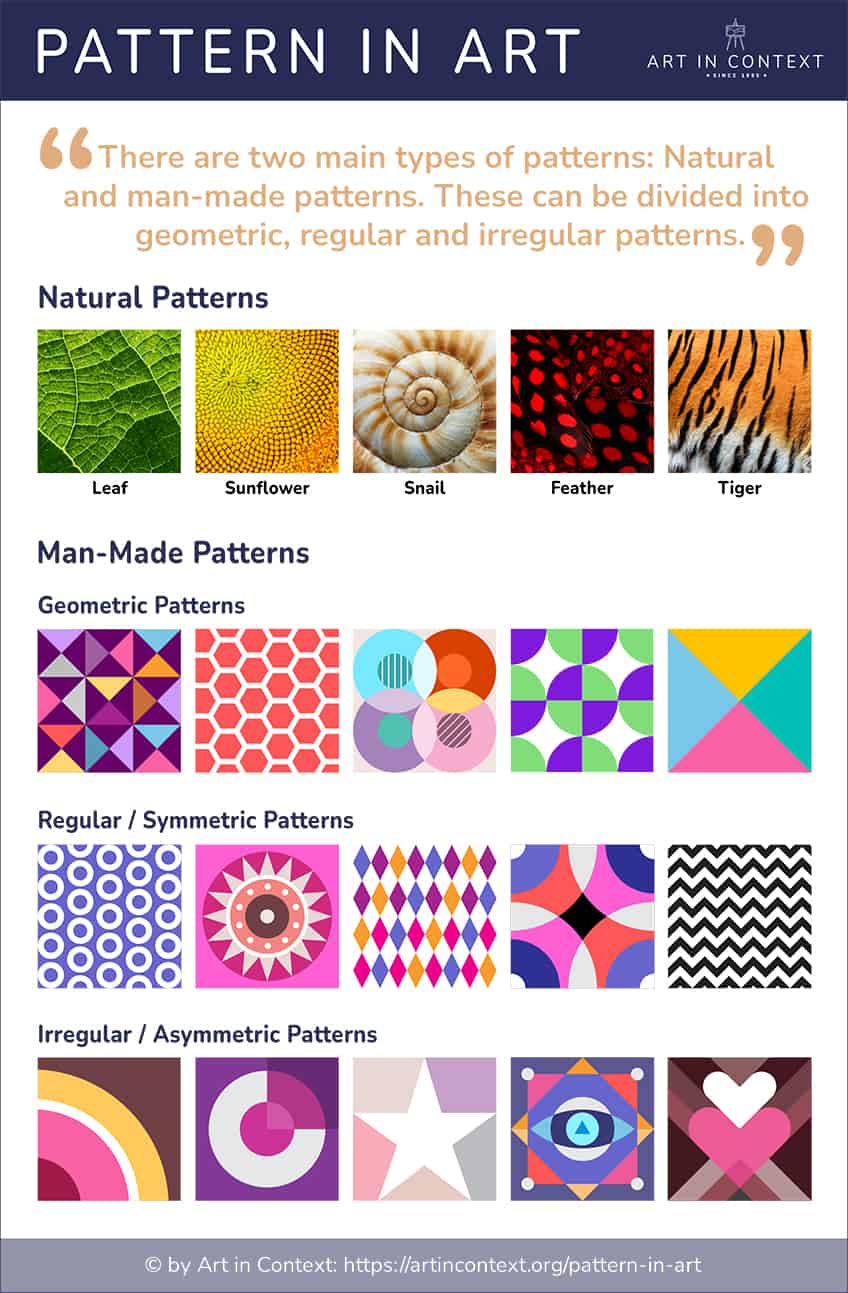
Artists use many kinds of pattern in art, and each one creates a different effect.
Regular pattern
A regular pattern repeats in a steady, predictable way. The spacing, size, or order stays the same. This creates balance and calm.
You see regular pattern in art in:
- Tiles arranged in rows
- Wallpaper designs
- Islamic geometric art
- Repeated textile prints
Irregular pattern
An irregular pattern repeats, but not in a strict or perfect way. The elements may change in size, color, or position. This makes the piece feel more organic and less formal.
You often see this in:
- Hand-painted surfaces
- Nature-inspired art
- Abstract compositions
Random pattern
A random pattern still has repeated elements, but the order feels loose or unpredictable. It may look natural, like leaves on the ground or stars in the sky.
Artists often use random pattern in art to create energy and movement. It works well when the goal is to avoid a stiff look.
Alternating pattern
An alternating pattern uses a repeated switch between two or more elements. For example, red, blue, red, blue. This is one of the easiest forms of pattern in art to notice.
It is common in:
- Floor designs
- Weaving
- Graphic design
- Borders and trim
Flowing pattern
A flowing pattern moves across the surface in a soft direction. It may curve, spiral, or wave. This gives the art a sense of motion.
Flowing pattern in art appears in:
- Art Nouveau design
- Water-inspired painting
- Fabric print work
- Decorative borders
Elements that create pattern in art
Pattern in art comes from repeating visual elements. The most common ones include:
- Line: Repeated straight, curved, thick, or thin lines can create structure.
- Shape: Circles, squares, triangles, and organic forms often form strong patterns.
- Color: Repeated color groups build rhythm and contrast.
- Texture: A repeated surface feel can make pattern in art more tactile.
- Value: Light and dark repetition can guide attention.
- Motif: A motif is a repeated image or symbol, like flowers, shells, or stars.
When these elements repeat, the viewer begins to anticipate what comes next. That anticipation is a big part of why pattern in art feels satisfying.
How artists use pattern in art
Pattern in art can do much more than decorate a surface. Artists use it for meaning, balance, emphasis, and storytelling.
To create rhythm
Repetition creates rhythm, just like music. The eye moves from one repeated form to the next. This gives the artwork a pulse.
To build unity
Pattern can tie different parts of a piece together. If similar forms appear across the composition, the work feels connected. Unity is one of the strongest benefits of pattern in art.
To control focus
A bold pattern can pull the eye toward a main area. A subtle pattern can support the background without stealing attention. Good artists know when to make pattern loud and when to make it quiet.
To express culture
Many traditions use pattern to show heritage and belief. For example, Islamic art often uses geometric repetition, while African textiles may use symbolic color and shape systems. In these cases, pattern in art is not just visual. It is cultural memory.
To add emotion
Pattern can feel soothing, playful, busy, sacred, or powerful. The mood depends on the repetition style, color, and spacing. A tight pattern can feel intense, while a soft one can feel peaceful.
Pattern in art across history
Pattern in art has a long and rich history. It shows up in nearly every major culture.
In ancient Egypt, pattern appeared in wall art, jewelry, and architecture. Repetition helped create symmetry and sacred order. In Greek and Roman art, pattern was used in borders, mosaics, and architecture to add grace and structure.
In Islamic art, geometric pattern reached extraordinary depth. Artists avoided figurative images in many contexts and instead built breathtaking complexity through repeated form. That tradition remains one of the clearest examples of pattern in art as both beauty and philosophy.
In Asia, pattern in art has often appeared in textiles, ceramics, screens, and temple decoration. Floral and symbolic motifs were used to express harmony and status. In Europe, the Renaissance and later decorative movements used pattern in art to enrich paintings, furniture, and interior design.
Today, pattern in art continues in fashion, branding, digital graphics, and street art. The tools have changed, but the visual language is still powerful.
Pattern vs repetition vs rhythm
These terms are related, but they are not identical.
- Repetition means an element appears again.
- Pattern in art means repetition is organized in a visual system.
- Rhythm is the sense of movement that repetition creates.
Think of it this way:
- Repetition is the beat
- Pattern is the structure
- Rhythm is the feeling
This simple difference helps when analyzing artwork. A piece may repeat a shape without forming a clear pattern. Or it may form a pattern that creates a strong sense of rhythm.
Benefits of using pattern in art
Pattern in art offers many benefits for artists and viewers.
- It makes art more engaging by adding visual interest.
- It improves balance by repeating forms across the piece.
- It supports memory because repeated motifs are easier to recognize.
- It can communicate culture and meaning in a direct way.
- It helps organize complex compositions.
- It works well in many media, from painting to digital design.
In my experience, pattern is especially useful when a composition feels empty. Adding a controlled pattern can bring the whole piece to life without overwhelming it.
Common mistakes artists make with pattern in art
Pattern is powerful, but it can go wrong if overused or handled carelessly.
- Too much repetition can make art feel boring.
- Too many competing patterns can create visual noise.
- Poor spacing can break the flow.
- A pattern with no contrast may blend into the background.
- Random pattern without intention can look messy instead of expressive.
One mistake I see often is using pattern just because it looks pretty. Strong pattern in art should support the whole work. It should have a reason to exist.
How to analyze pattern in art
If you want to study pattern in art, ask a few simple questions:
- What repeats?
- How often does it repeat?
- Is the repetition regular or irregular?
- What mood does the pattern create?
- Does the pattern support the subject or distract from it?
- Is there a cultural or symbolic meaning?
This is a useful method for students, collectors, and casual viewers. It helps you move beyond “I like it” or “I don’t like it” and toward real visual understanding.
Pattern in art in modern design
Pattern in art is everywhere in modern life. You see it in fashion prints, logos, packaging, user interface graphics, product design, and home decor. Digital tools have made it easier to test pattern quickly and scale it across many surfaces.
One thing I’ve learned from design work is that pattern must match purpose. A soft pattern may work well for a wellness brand, while a sharp geometric pattern may suit tech or architecture. The same visual idea can feel very different depending on where it is used.
Modern creators also mix old and new. They may borrow from traditional textiles, folk motifs, or classical geometry, then adapt those patterns for social media, apps, or product labels. That blend keeps pattern in art fresh and relevant.
How to create stronger pattern in art
If you want to make better use of pattern in art, start small and stay intentional.
- Choose one main motif before adding more.
- Decide on a rhythm, such as regular, alternating, or flowing.
- Keep spacing consistent unless you want tension.
- Use contrast to separate pattern from background.
- Test the design at different sizes.
- Step back often to see if the pattern supports the full piece.
A practical tip from experience: if a pattern feels too busy, remove one layer before adding another. That usually helps more than forcing more detail into the composition.
Frequently Asked Questions
What is the purpose of pattern in art?
Pattern in art helps organize visual space and guide the viewer’s eye. It can also create rhythm, balance, and meaning within a work.
Is pattern in art the same as repetition?
No, but they are closely related. Repetition is the repeated use of an element, while pattern in art is repetition arranged in a deliberate visual structure.
Why is pattern important in culture?
Pattern often carries history, identity, and symbolism. Many cultures use pattern in art, clothing, and architecture to show values, beliefs, and tradition.
Can pattern in art be abstract?
Yes, absolutely. Many abstract works use pattern through repeated shapes, lines, or colors without showing real-world objects.
How do you identify pattern in art?
Look for repeated elements, spacing, and visual rhythm. Ask what repeats, how it repeats, and what effect it creates on the viewer.
Conclusion
Pattern in art is much more than decoration. It is a visual tool that creates rhythm, balance, meaning, and emotion. Whether it appears in ancient mosaics, modern graphics, or handwoven textiles, pattern in art helps shape how we see and feel a work.
If you want to understand art more deeply, start paying attention to repetition, spacing, and motif. The more you notice pattern in art, the more you will see how artists use it to speak without words. Explore more artworks, try building your own patterns, and share what you discover along the way.