Finding your art niche means identifying the subjects, styles, themes, and audiences that connect your creative interests with your strongest skills and real market opportunities. Start by reviewing your existing artwork, exploring recurring interests, researching potential buyers, and testing a few focused collections. Your niche should give your work direction without limiting your creative freedom.
For artists across the United States, finding an art niche means choosing a clear direction that connects the work you want to make with the people who may collect, commission, license, or display it. Your niche can grow from a subject, a visual style, a theme, a medium, or a defined audience. You do not need to settle on one narrow subject or make every piece look the same.
Start by reviewing your artwork and naming the patterns you return to most often. Then test two or three promising directions through small collections, local art events, online shops, or direct conversations with potential buyers. Look for a balance of lasting interest, growing skill, and genuine audience response rather than choosing a niche only because it seems popular.
Source: storage.googleapis.com
What Does Finding Your Art Niche Really Mean?
An art niche is a clear area of creative focus that helps people understand what you make and why they might connect with it. It gives your work a recognizable direction. It also helps you decide which projects, products, and audiences deserve your attention.
Think of your niche as the central thread running through a collection of artwork. Individual pieces can look different, but they share something that makes them feel connected. That shared quality might be a subject, a mood, a color palette, a message, or the people you create for.
For example, one artist may paint realistic wildlife portraits for nature lovers. Another may create colorful abstract work for modern homes. Both have clear niches, even though their subjects, techniques, and audiences differ.
Source: boulderdiagnostics.com
Subject matter
The people, animals, places, objects, or ideas shown in your work. Examples include botanical art, pet portraits, landscapes, food illustrations, and city scenes.
Artistic style
The visual approach people recognize in your work. This may include realism, minimalism, abstract forms, fantasy, bold linework, or a distinctive use of color.
Theme
The main idea or feeling behind your artwork. Common themes include nature, memory, identity, freedom, nostalgia, humor, and social change.
Medium
The materials or tools you use, such as oil paint, watercolor, acrylic, ink, photography, sculpture, or digital illustration.
Audience and use
The people who may value your work and how they may use it. Your art might serve collectors, book publishers, interior designers, gift buyers, or commercial brands.
A Niche Is More Than One Subject
You do not need to paint the same object forever to build a recognizable identity. A shared style can connect many subjects. For example, an artist who uses soft colors, delicate linework, and natural textures could paint flowers, birds, homes, and landscapes while keeping a clear visual identity.
The same idea works with an audience-based niche. An artist who creates illustrations for children’s books may explore many subjects while serving one clear market. The goal is to build a connection that people can understand and remember.
Start by Studying Your Existing Artwork
Your current artwork is one of the best places to begin. You may already have a niche taking shape without realizing it. Repeated subjects, colors, moods, techniques, and themes can reveal patterns that are hard to see while you are creating.
Gather your finished work, sketches, photographs, and digital projects in one place. If you have a large collection, review a manageable group of around 20 to 30 pieces. If you are a beginner, use everything you have and repeat the exercise as your portfolio grows.
Look at the work as a group rather than judging each piece alone. Ask what appears again and again. Also ask which pieces you would happily make more of, even if nobody asked you to create them.
Source: serenaarchetti.com
Look for repeated subjects
Notice whether you often draw animals, people, plants, buildings, landscapes, food, or fantasy characters.
Study your visual choices
Look for repeated colors, shapes, textures, lighting, compositions, and methods of working.
Notice emotional themes
Identify the feelings your work often explores, such as calm, wonder, humor, loneliness, joy, or nostalgia.
Review past feedback
Look at genuine comments, requests, commissions, and questions. Notice which parts of your work people discuss most.
Identify your favorite projects
Separate the work you enjoy making from the work you completed only because someone requested it.
Create a Personal Art Pattern List
Write down the patterns you find. Group them under subjects, techniques, themes, colors, and personal interests. This simple list can help you see links between ideas that first seemed unrelated.
For example, you may discover that you enjoy painting birds, flowers, and old buildings. At first, these subjects seem separate. However, they may share a love of nature, quiet places, and detailed textures. That shared interest could become the foundation of a thoughtful art collection.
Keep an open mind
Do not force every artwork into one category. Some pieces may belong to personal experiments rather than your future niche.
Separate interest from skill
You may love a subject that still needs practice. Record both your enjoyment and your current ability.
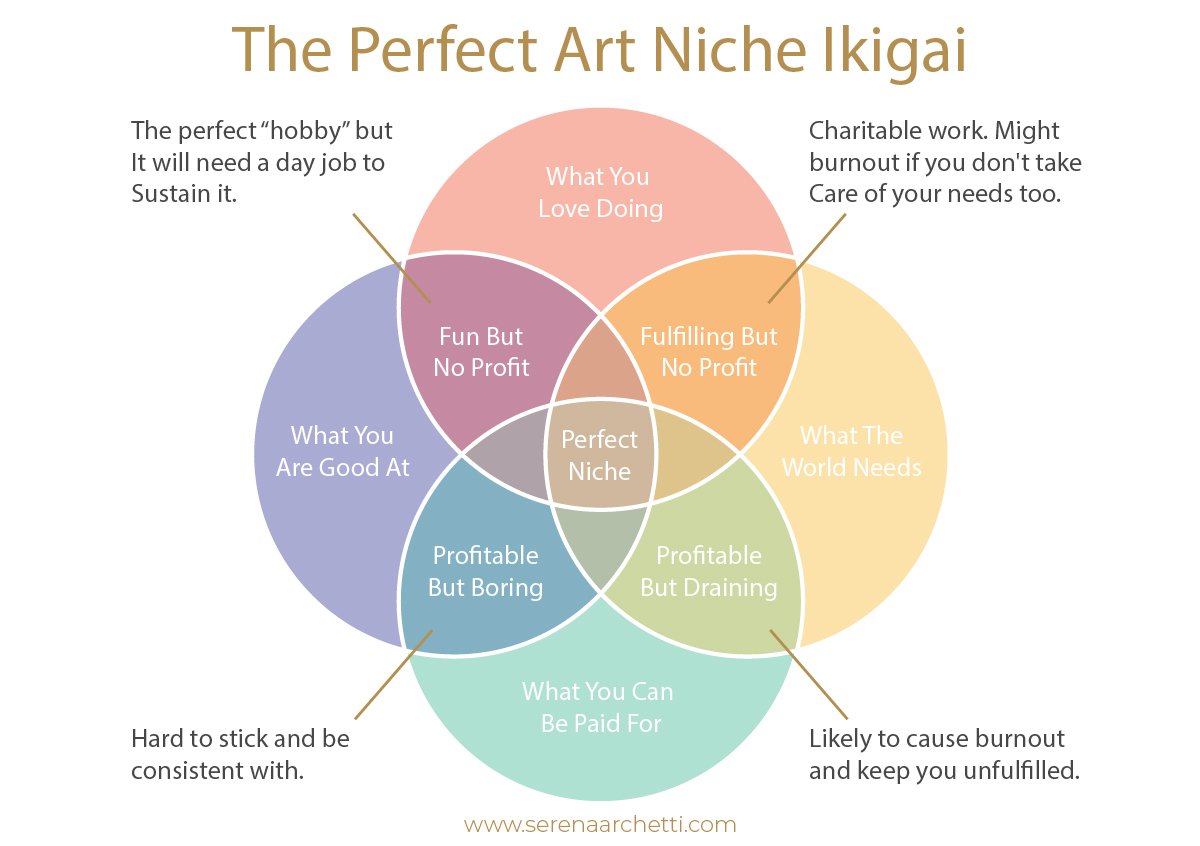
Find the Overlap Between Passion, Skill, and Demand
A sustainable art niche should make sense for both your creative life and your practical goals. Three useful factors are personal interest, artistic ability, and audience demand. Looking at all three helps you avoid choosing a direction that becomes difficult to maintain.
Passion gives you a reason to keep creating. Skill helps you produce work that meets your own standards and the needs of your intended audience. Demand helps you understand whether people are interested in collecting, buying, commissioning, or using that work.
These factors do not need to be equally strong on your first day. You can improve your skills through practice, and you can learn more about your audience through research. The goal is to find a direction where all three can develop together.
Source: prism-alpaca-tgb5.squarespace.com
Personal interest
Ask whether you enjoy the subject enough to explore it through many different pieces. A niche often requires repetition, so lasting curiosity matters.
Current strengths
Identify the techniques and subjects where your work is already strong. Consider which skills you are willing to improve.
Audience demand
Look for people who already collect, commission, display, or purchase similar work. Their needs can help you shape a useful offer.
Practical fit
Consider the time, materials, production costs, and delivery requirements involved in making the work consistently.
Use a Simple Art Niche Scorecard
Choose three possible niches and rate each one from 1 to 5 on several personal factors. Use your interest, skill, audience clarity, production needs, and room for future growth. This is a thinking tool, not a scientific measure of commercial success.
A wildlife watercolor niche may score highly for personal interest and skill but need more market research. A custom pet portrait niche may have clear buyer interest but require a careful plan for deadlines and revisions. Comparing these details can make your next step easier.
High interest and low skill
Practice the subject and make sample work before treating it as your main business focus.
High skill and low interest
Consider keeping this work as a service or occasional project rather than your main creative direction.
High interest and unclear demand
Research the audience and test a small collection before investing heavily in materials or inventory.
Strong overlap
Develop a focused body of work and test how people respond to it.
Choose a Niche That Fits Your Creative Direction
Once you understand your interests and strengths, decide which part of your art should define your niche. Some artists focus on one subject. Others become known for a visual style, a theme, or the people they serve. You can also combine these elements when they support one clear direction.
The best starting point depends on how you want to work. An illustrator who wants to work with publishers may need a different focus from a painter who wants to sell original work at American art fairs. Your niche should support the type of creative work you want to produce and the opportunities you want to pursue.
You should also think about how people will experience your artwork. A piece created for a gallery may need a different scale and presentation from an illustration made for a greeting card or a mural designed for a public space.
Source: itsoverflowing.com
Subject-based niche
Focus on a clear subject, such as wildlife, botanical illustrations, architectural drawings, portraits, or coastal landscapes.
Style-based niche
Build recognition through a consistent visual language, such as geometric abstraction, soft watercolor, expressive brushwork, or detailed realism.
Audience-based niche
Create work for a defined group, such as pet owners, children’s publishers, nature lovers, interior designers, or collectors of regional art.
Theme-based niche
Explore a central idea, such as family memories, environmental care, cultural stories, or everyday life.
Think About the Final Use of Your Artwork
Your niche can also reflect where your work will appear. Original paintings, limited prints, book illustrations, surface patterns, murals, and digital assets serve different needs. Knowing the intended use can help you decide what to create and which skills to develop.
For example, an artist who makes botanical illustrations may create original watercolor paintings for collectors. The same artist could also develop repeat patterns for fabric or illustrations for educational books. The visual interest stays connected, even when the final products differ.
Do not add every possible product at once. Begin with the format that best fits your skills, resources, and audience. Expand when you understand the extra time, production, and business needs involved.
Original artwork
Suitable for artists who want to develop individual pieces and build relationships with collectors or galleries.
Prints and merchandise
Useful when your artwork can work across repeatable formats such as posters, cards, or home decor.
Commercial illustration
A possible direction for artists who enjoy working with publishers, brands, agencies, or editorial clients.
Public and interior art
May suit artists interested in murals, large-scale work, public projects, and commissioned installations.
Research Your Art Niche and Understand Your Audience
Market research helps you understand who may value your work and where you can reach those people. It does not mean copying successful artists or changing your creative identity to follow every trend. It means learning enough about the market to make informed decisions.
Begin with artists who create work in related fields. Study their subjects, presentation, formats, prices where available, and ways of reaching buyers. Look at what makes their work recognizable, but focus on identifying your own approach rather than reproducing theirs.
In the United States, useful places to explore include local galleries, art fairs, craft markets, online art marketplaces, specialty publications, artist communities, and professional groups. The right place depends on the kind of work you create and the people you hope to reach.
Source: artplacer.com
Study comparable artwork
Review several artists in related niches. Compare their portfolios, product formats, presentation, and customer needs.
Read buyer feedback
Look at public reviews and questions where available. These can reveal concerns about size, personalization, materials, delivery, or intended use.
Visit relevant events
Explore local exhibitions, art walks, craft fairs, and specialist events. Notice which audiences attend and what kinds of work they engage with.
Research online interest
Use marketplace searches and relevant online communities to understand the words people use when looking for artwork.
Talk with potential buyers
Ask clear questions about what people like, what they need, and how they might use or purchase your work.
Build a Clear Picture of Your Ideal Audience
An ideal audience is not simply everyone who likes art. It is a group of people with a reason to connect with the work you make. Their interests, needs, budgets, and buying habits can shape how you present your art.
Imagine that you create detailed paintings of horses. Your possible audience may include horse owners, equestrian families, collectors, and people involved in riding communities. Each group may value a different format, subject, or type of commission.
You do not need to reach every group. Choose the audience that best matches your work and your preferred way of working. This makes it easier to select events, platforms, and marketing messages.
Collectors
May value original work, a coherent artistic voice, the story behind a collection, and clear information about each piece.
Commission clients
May need clear prices, examples, timelines, customization options, and a simple way to request work.
Commercial clients
May look for a relevant portfolio, usage rights, professional communication, and reliable project delivery.
Print buyers
May care about subject, color, size, framing options, price, and how the artwork fits their space.
Test Your Art Niche Before Fully Committing
A promising niche should be tested through actual creative work and audience response. Research can help you form an idea, but it cannot tell you everything about how people will respond to your artwork. Small experiments help you learn without making a large financial commitment.
Choose two or three possible directions and create a small collection for each. Each collection should have enough work to show a clear idea. You might prepare a group of related paintings, a set of digital illustrations, or a small selection of print designs.
Share the collections with relevant audiences. You can use an online portfolio, a small exhibition, a local market, or direct conversations with potential clients. Give each direction a fair chance and record what happens.
Source: prism-alpaca-tgb5.squarespace.com
Step 1: Select your ideas
Choose two or three niches that match your interests and skills. Write down the audience and intended use for each one.
Step 2: Create sample work
Make a small group of finished pieces that clearly represents each direction. Keep the time and material costs manageable.
Step 3: Present the collections
Share the work in places where the intended audience is likely to see it. Use clear descriptions and good images.
Step 4: Gather feedback
Record meaningful questions, inquiries, saves, requests, and purchases. Ask what people liked and what would make them consider buying.
Step 5: Review the results
Compare audience response, production effort, personal enjoyment, and the quality of the opportunities that appeared.
Understand the Difference Between Attention and Demand
Likes and compliments can show that people noticed your work. They do not always show that people are ready to buy it. A serious inquiry, a paid commission, a repeat order, or a request for licensing information may provide a stronger business signal.
Look at several types of feedback together. A collection with fewer views may attract more serious buyers than one with broad social media attention. A niche that receives many compliments but few inquiries may need a different price, presentation, audience, or product format.
Do not make a final decision based on one post or one event. Results can change with timing, audience size, presentation, and seasonal interest. Repeat your test when needed before deciding that an idea has failed.
Useful signals
Paid orders, repeat customers, serious inquiries, relevant referrals, and clear requests for similar work.
Early attention signals
Likes, comments, views, shares, and general compliments. These are useful for awareness but do not prove commercial demand.
Warning signs
High production costs, repeated requests for prices that are not sustainable, or strong interest from people outside your intended market.
Create an Art Portfolio That Supports Your Niche
Your portfolio should make your creative direction easy to understand. It is a selected group of work, not a complete record of everything you have ever made. Each piece should help visitors understand your style, subject, skill, or intended audience.
Choose your strongest examples from the niche you want to develop. Include enough variety to show your ability without making the collection feel unrelated. A clear portfolio gives potential buyers, galleries, publishers, and clients a better idea of what they can expect.
You can keep personal experiments outside your main business portfolio. They still matter because they help you grow as an artist. However, your public presentation should support the kind of work you want people to remember you for.
Source: gelato.com
Select relevant work
Choose pieces that show the subjects, techniques, and themes connected to your chosen direction.
Show a consistent visual identity
Look for a natural connection in your colors, compositions, materials, or creative approach.
Use clear photographs
Show accurate colors, useful details, and the full artwork. Include dimensions and materials when relevant.
Add helpful descriptions
Explain the subject, process, purpose, and availability of each work where appropriate.
Remove unrelated pieces
Keep work that supports your current direction. Place unrelated experiments in a separate personal gallery if you still want to share them.
Write a Simple Artist Niche Statement
An artist niche statement explains what you create, how you create it, and who may value it. It should be clear enough for a potential buyer to understand without needing a long explanation. You can refine the wording as your portfolio develops.
Try this simple structure: I create [type of artwork] using [style or medium] for [audience or purpose]. For example, I create detailed watercolor illustrations of native plants for nature lovers, educational publishers, and botanical collections.
This statement is a guide for your decisions, not a permanent label. It can help you write your website introduction, portfolio description, social media profile, and project proposals.
Be specific
Use words that describe your actual artwork rather than broad phrases such as creative work or unique designs.
Use natural language
Choose terms that your intended audience understands and may use when searching for your work.
Leave room to grow
Avoid wording so narrow that a small change in subject or technique makes your statement inaccurate.
Keep Your Niche Flexible as You Develop
Your niche can change as your skills, interests, and opportunities develop. Finding a direction does not mean signing a lifetime contract with one subject. It simply gives you a useful starting point for building a recognizable body of work.
You may begin with watercolor landscapes and later explore architectural details or botanical subjects. If the same visual approach and audience remain relevant, these changes can feel like natural growth. You can also develop a new series that explores a different theme while keeping your central artistic identity.
The key is to make changes with purpose. If you already have collectors or clients, introduce new directions gradually. Give people enough context to understand how the new work connects with your existing practice.
Source: eyrc.com
Build related collections
Explore nearby subjects or themes that share a clear connection with your current work.
Keep personal experiments
Allow yourself to create outside your business niche without forcing every experiment into your main portfolio.
Review your audience
Pay attention to changing requests, buying patterns, and the types of projects that fit your goals.
Update your presentation
Refresh your portfolio and artist statement when your work develops in a meaningful new direction.
What If You Have Too Many Creative Interests?
Having several interests is not a problem by itself. Many artists work across different subjects, techniques, and formats. The challenge is finding a shared idea that connects those interests in a way people can understand.
You might create portraits, landscapes, and abstract paintings but use a common color palette and emotional style. Another artist might work in several mediums but focus on environmental stories. These shared elements can create a clear artistic identity without removing variety.
If your interests have no obvious connection, test them as separate small collections. You may find that one direction deserves more attention, or that two interests work well together. You do not need to force a connection that does not feel natural.
Find a shared style
Use a recognizable visual approach to connect different subjects.
Find a shared audience
Explore whether the same group of people would value your different types of work.
Create separate collections
Keep unrelated projects distinct when they serve different audiences or purposes.
Common Mistakes When Choosing an Art Niche
Choosing a niche can feel exciting, but rushing the decision can create problems. Some artists focus only on what appears profitable. Others narrow their work too much before they understand their interests or abilities. A useful niche should support creative growth as well as practical goals.
Another common mistake is comparing your early work with an established artist’s finished portfolio. Every artist develops at a different pace. Use other artists to understand the market and learn new methods, but do not treat their success as proof that you must follow the same path.
Your niche should also reflect your real working conditions. Consider the time needed to complete a piece, the cost of materials, the type of client communication involved, and the level of customization you can manage. These details matter when you want to turn creative work into a reliable business.
Source: gelato.com
Following trends without personal interest
A popular subject may attract attention, but it may become difficult to sustain if you do not enjoy making the work.
Trying to appeal to everyone
A broad message can make it harder for people to understand what makes your work relevant to them.
Confusing a medium with a niche
Using watercolor or digital tools does not automatically define your audience or artistic identity.
Changing direction too often
Frequent changes can make your portfolio difficult to understand. Give a promising direction enough time to develop.
Ignoring production limits
A niche may attract interest but still be difficult to maintain if the materials, time, or customization needs are not practical.
Copying another artist
Study the market, but develop your own ideas, visual decisions, and creative approach. Do not reproduce another artist’s protected work.
How to Respond When Your First Niche Does Not Work
A weak first response does not always mean the niche is wrong. Your artwork may need more development, your audience may be too broad, or your presentation may not explain the value of the work. Review the full process before abandoning the idea.
Ask whether people understood the work, whether the price matched the format and audience, and whether you shared it in the right places. Make one or two clear changes and test again. If interest remains low and the work no longer feels meaningful, consider another direction.
Improve the work
Develop the techniques or presentation that appear weakest in your sample collection.
Adjust the audience
Consider whether a different group may have a stronger connection with the same artwork.
Change the format
Explore whether prints, commissions, licensing, or another format better fits the work.
Try a different direction
Use what you learned from the test to choose a more suitable subject, theme, or audience.
Next Questions to Answer Before Committing to a Niche
Choosing a niche is only the first part of building a focused art practice. Your next decisions may involve how to earn from your work, how to reach the right people, and how to adjust when your first ideas receive mixed responses. These questions help connect creative direction with practical action.
A review of four relevant artist and creative-business guides on November 22, 2026, covered personal interests, artistic strengths, market demand, audience selection, and small collection tests. The reviewed material included both step-by-step niche guides and broader advice on marketing art to a defined audience. The following gap map highlights additional decisions that deserve clear answers.
OBSERVED QUESTION: What if I have several artistic interests?
Reader stage: Choosing a niche. Existing coverage: ANSWERED in reviewed guides, but practical ways to connect unrelated interests need more detail. Reader benefit: Artists can keep creative variety while developing a recognizable direction. Priority: High. Placement: Flexible niche section.
OBSERVED QUESTION: Can my artistic style be my niche instead of one subject?
Reader stage: Defining artistic identity. Existing coverage: ANSWERED in reviewed guides. Reader benefit: Understand how a consistent palette, mood, or technique can connect different subjects. Priority: Medium. Placement: Niche definition section.
OBSERVED QUESTION: What if I become bored with my chosen niche?
Reader stage: Developing an established practice. Existing coverage: ANSWERED, but transition steps can be clearer. Reader benefit: Introduce new collections without confusing existing buyers. Priority: High. Placement: Flexible niche section.
INFERRED NEXT NEED: Which niche fits gallery sales, commissions, prints, or licensing?
Reader stage: Choosing a business model. Existing coverage: SHALLOW across the reviewed pages. Reader benefit: Understand the different portfolio, audience, and production needs of each route. Priority: High. Placement: Audience and intended use sections.
INFERRED NEXT NEED: How should an artist judge early test results?
Reader stage: Validating a niche. Existing coverage: SHALLOW because general testing advice does not always explain the difference between attention and buying intent. Reader benefit: Avoid making a major decision from a small number of likes or one unsuccessful event. Priority: High. Placement: Niche testing section.
INFERRED NEXT NEED: How long should an artist test a niche?
Reader stage: Reviewing progress. Existing coverage: MISSING as a clear universal testing period. Reader benefit: Understand why testing time depends on audience size, product type, sales cycle, and season. Priority: Medium. Placement: Niche testing section.
Choose Your Next Business Decision
If you want to sell original work, focus on a coherent collection, presentation, pricing, and collector relationships. If you prefer commissions, prepare clear examples, project terms, and a reliable process for discussing custom requests. Artists interested in licensing may need a different portfolio that shows how their designs can work across products.
These routes can overlap, but they do not require the same business setup. Choose one primary route to test first. This gives you a more useful way to assess your niche than trying to build every possible income stream at once.
For gallery-focused artists
Develop a connected body of work, clear presentation materials, and an artist statement that explains the ideas behind the collection.
For commission artists
Show relevant examples and explain prices, timelines, revisions, deposits, and delivery terms.
For print and merchandise artists
Test suitable artwork formats and learn about production quality, costs, and customer preferences.
For licensing artists
Prepare a focused collection of designs and learn about usage rights, contracts, exclusivity, and royalty terms before agreeing to a deal.
Frequently Asked Questions
Q
How do I find my art niche as a beginner?
Start with subjects and techniques you enjoy exploring. Make several small projects and review them for repeated themes, colors, and visual choices. Practice the areas where you want to improve, then share selected work with people who may connect with it. Your niche can become clearer as your skills and experience grow.
Q
Do I need to choose only one art medium?
No. You can work with several mediums while maintaining a clear artistic identity. A shared subject, theme, audience, or visual style can connect watercolor, acrylic, photography, and digital work. Start with the mediums you can manage well and expand when you have a clear reason to do so.
Q
How many artworks do I need before choosing a niche?
There is no fixed number. A group of 20 to 30 finished works can provide useful patterns if you already have a large portfolio, but beginners can start with fewer pieces. What matters is having enough work to compare your interests, strengths, and repeated creative choices. Continue reviewing your direction as you create more.
Q
Can I have more than one art niche?
Yes. You can develop several related collections or serve more than one audience. However, each direction should have a clear purpose and a recognizable connection to your overall creative identity. If two niches are very different, separate portfolios or collection pages may help people understand each one.
Q
How do I know if my art niche can make money?
Look for more than social media attention. Research comparable work, understand the needs of potential buyers, and test a small collection through real offers. Paid orders, serious commission requests, repeat customers, and relevant licensing inquiries can provide useful evidence. No research method can guarantee income, so consider costs, time, and demand before making a large investment.
✦ Wrapping Up
Conclusion
Finding your art niche is a process of learning what makes your creative work meaningful, recognizable, and useful to a particular audience. Begin with your existing artwork, explore the subjects and methods that interest you, and identify the skills you want to develop. Then compare those interests with the needs of people who may collect, commission, or use your work.
You do not need to make a permanent decision today. Test a few directions through small collections, listen to meaningful feedback, and review your results with care. Your niche should give you enough focus to build recognition while leaving room for new ideas, skills, and creative growth.
💡 Key Takeaway
This week, review your existing artwork and write down five recurring subjects, styles, or themes. Choose your three strongest ideas, identify a possible audience for each, and create one small sample collection to test. Use the results to choose the direction you want to develop next.